Hermes in the House!

Above: The image of Hermes, patron saint of the business school, is displayed on the west side of the Texas Union building, along with the patron saints of law and engineering.

 Choosing a patron saint can be complicated. Just ask the business school.

~~~~~~~~~~

Business classes were first offered on the Forty Acres in 1912, initially organized as a department under what was then the College of Arts and Sciences. But after a decade of rapid and prosperous growth, it was time for the department to leave the nest and fly on its own. In early April 1922, department chair Spurgeon Bell learned that UT President Robert Vinson planned to recommend a separate School of Business Administration to the Board of Regents. The regents’ approval was assured at their upcoming July meeting, and Bell would be named the school’s first dean.

Bell shared the exciting news with his students, who quickly set about planning a celebration. With Bell’s encouragement, the business students met Friday, April 7th in the auditorium of the old Law Building (where, perhaps appropriately, the Graduate School of Business Building stands today). A committee was appointed to organize the first annual business administration banquet, to be held in early May. A second committee addressed the issue of a business school identity.

Above right: The old Law Building, near the corner of 21st and Speedway Streets, where the Graduate School of Business Building stands today. The houses in the upper right have been replaced by the Perry-Castaneda Library, and the field in the upper left is now the Jester Center Residence Hall.

~~~~~~~~~~

By 1922, the University’s engineering and law schools had mascots – “patron saints” – around whom their respective students and alumni had developed a healthy espirit de corps. The law school’s Peregrinus, or “Perry,” (image at left) was invented on a chilly afternoon in December 1900, during a class in equity. The professor was lecturing on Ancient Rome and the praetor peregrinus, a traveling magistrate who administered justice in the less populated regions of the Roman Empire. An unprepared student in the class was quizzed on the subject. “I don’t know,” he mumbled. “The peregrinus was probably some kind of animal.” The class burst out in laughter, but fellow student Russell Savage, sitting in the back of the room next to a chalk board, doodled a likeness of the imaginary creature that was later adopted as the law school mascot.

With four legs, a bushy tail, and a long beak, “Perry” was meant to symbolize the prowess of lawyers in their chosen profession. A wooden likeness of the Peregrinus was commissioned, and fashioned by local woodcarving master Peter Mansbendel. Kept secure, it made special appearances and attended the law banquets where it was ceremoniously passed from the graduating seniors to the juniors.
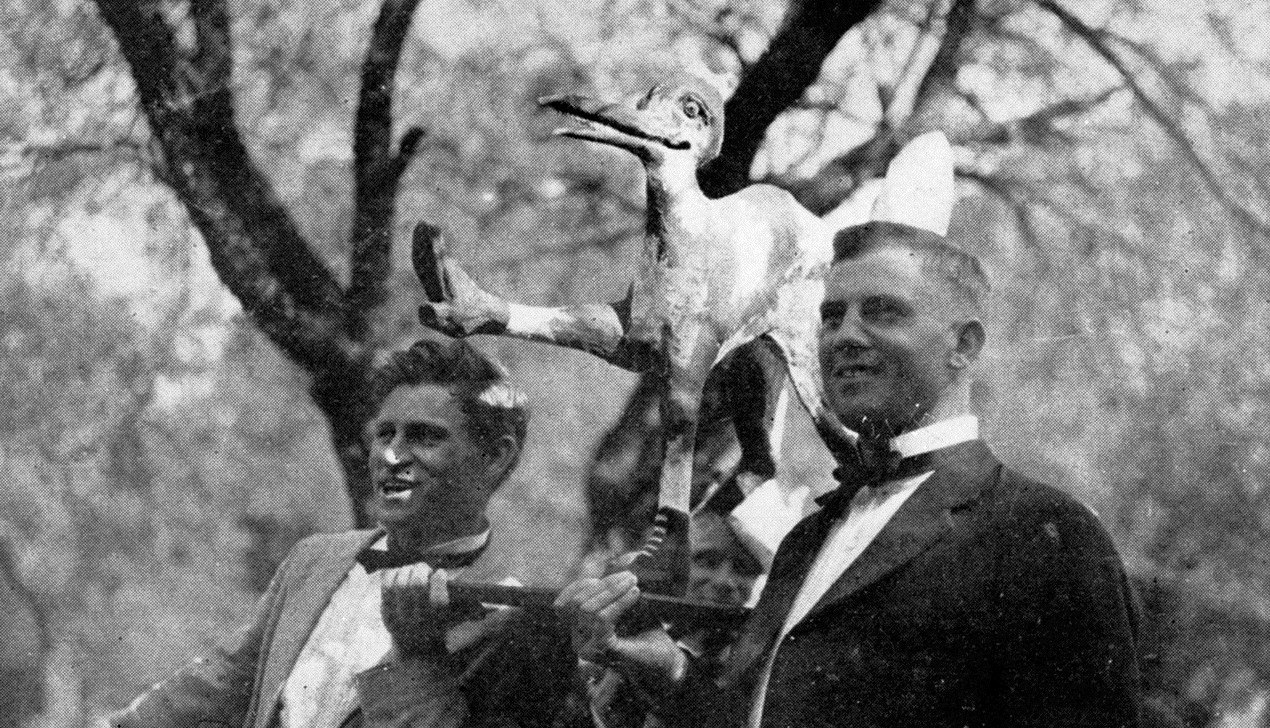
Above: Senior law students carry the Peregrinus at spring commencement. 

Meanwhile, the engineers have claimed Alexander Frederick Claire, or simply “Alec”. Once a character in a popular song, Alec took on physical form in 1908. A group of engineering students visited a local beer garden, discovered a five-foot tall wooden statue of a medieval Falstaff, and decided to permanently “borrow” him. (See: The Thrilling Adventures of Alec!)

The patron saints of engineering and law had storied histories, helped to fuel an ongoing campus rivalry between the two schools – both mascots had been kidnapped by the “enemy” – but most important, they provided a symbol of pride and common loyalty. The business students wanted to join the fun, and sought an icon they could call their own.

~~~~~~~~~~

Initially, the mascot committee considered using the shark. “Because of the prevalence of calling students in the [business] department sharks,” explained The Daily Texan, “it was suggested that an insignia of a shark be used to denote the department.” It was an obvious choice, as much of the campus had nicknamed business students “sharks” for years. But it provided no central character around which the school could rally, and, quite frankly, the label wasn’t always a positive one. Professor Bell urged his students to try again, and look for a mascot that represented the best in business endeavors. For the next several weeks, the committee agonized over the decision.

On the evening of Wednesday, May 10, 1922, business students and faculty gathered at the Stephen F. Austin Hotel for their first annual banquet. As part of the proceedings, the mascot committee revealed their final recommendation: Hermes, the Ancient Greek god of commerce, who was noted for his eloquence, speed, shrewdness, and wisdom. The idea met with the instant approval of everyone, and a framed “rough copy” of the new patron saint was placed on the head table.

Over the summer, as expected, the Board of Regents officially created the School of Business Administration. “Mr. and Mrs. Texas University announce the arrival of a new son, B. A. School,” reported the Texan. “The rapid development of the business training classes has been phenomenal. With the creation of a separate school, this division of the University will have greater opportunities for growth and improvement.”
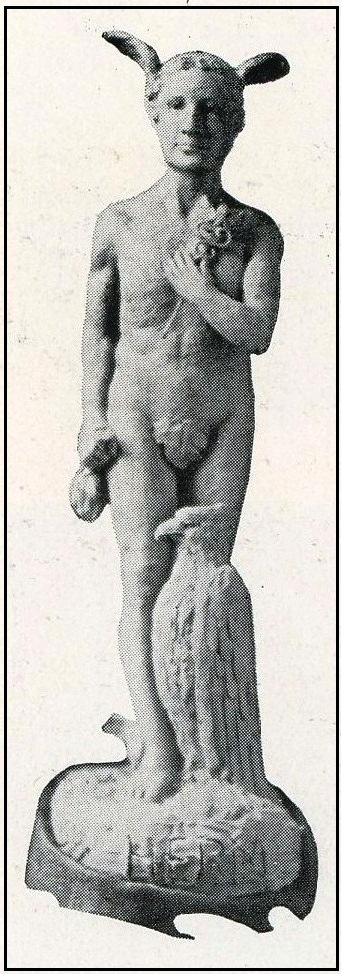
In October, as the academic year began, business students pursued a better representation of their new patron saint. They contacted Peter Mansbendel, the same master woodworker who had helped the law school with the Peregrinus.

Several designs were considered, including one of Hermes sitting on a pot of gold, but the most popular was a standing Hermes with an American Bald Eagle at his feet. Mansbendel fashioned a miniature prototype out of clay that was officially approved and accepted at a business school assembly on November 28th. Fundraising for the final version began in earnest with the spring, but the needed monies weren’t acquired in time for Mansbendel to complete the project for the 1923 banquet. Instead, Hermes was readied over the summer, and then spent many months safely locked in a vault owned by the American National Bank in the Littlefield Building downtown. He finally made his debut at the May 12, 1924 business banquet, and was the star of the show.

Above right: The original clay rendering of Hermes.

Thirty-eight inches tall and made from pine, Mansbendel’s Hermes wears winged sandals as a symbol of his swiftness. With his left hand near his heart he holds a caduceus, a staff with two entwined snakes that was a symbol of commerce to the Ancient Greeks, and declares Hermes the authority of strategic negotiations. In his right hand he carries a bag of gold, a trophy of his successful commercial transactions. An eagle sits at his feet, evidence that the business school’s Hermes is “one hundred percent American” despite his distant origins. For UT business students, their patron saint is a symbol of strength, success, innovation, and efficiency in the commercial enterprise.

Above: Peter Mansbendel’s rendering of Hermes.

While Hermes was kept safely out-of-sight for most of the year, other schools, perhaps jealous, schemed to capture the patron saint for themselves. At the1927 business banquet, a contingent of law and engineering students conspired together, and rushed the banquet floor with the intent to steal Hermes away for their own evil purposes. A brief but raucous wrestling match ensued, and the unified business students managed to repel the invasion force. Since then, no one has dared to attempt a patron saint-napping.
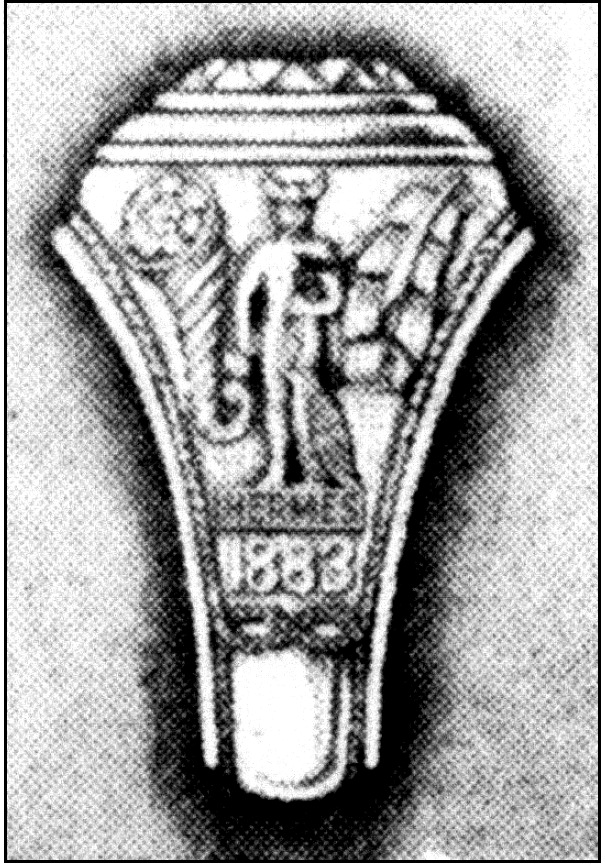
For another two decades, Hermes was a regular guest at the annual business banquet, but after World War II, when a wave of returning veterans nearly doubled UT’s enrollment in just a few years, the event became impractical. Instead, Hermes was placed on display in Dean J. Anderson Fitgerald’s office in Waggener Hall. Through the 1950s, the patron saint could be seen on the senior rings of business students (photo at left).

Today, Hermes is still a proud tradition of the McCombs School of Business. He stands in the undergraduate student office, surveying his dominion, and inspires business students to be their best in leadership, innovation, ethics, and entrepreneurship.

Above: Pals forever. Business Dean J. Anderson Fitzgerald and Hermes in 1947.
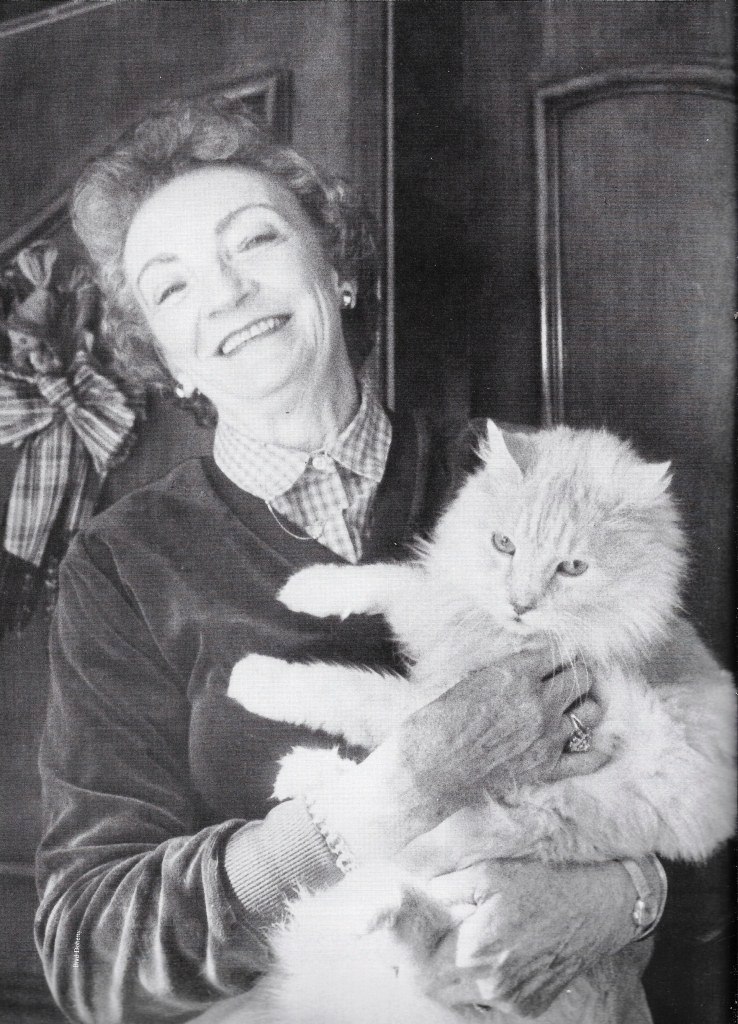
Thinking of Margaret

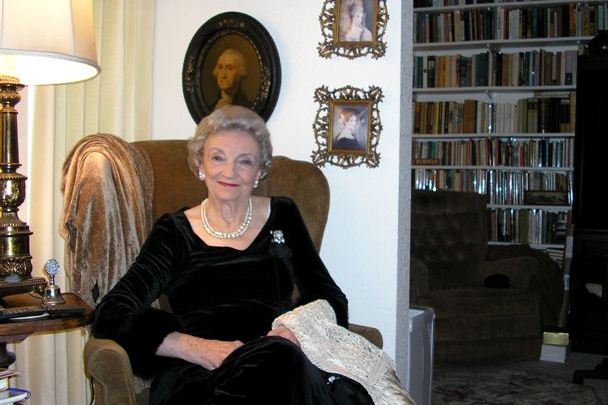
Margaret Catherine Berry: August 8, 1915 – April 9, 2017

To my fellow UT students, she was the “cacciatore lady.” I soon discovered why.

In the 1980s, Margaret Berry, who claimed to have retired from her career at the University of Texas, was still an active volunteer advisor for several student organizations – the Alpha Phi Omega service fraternity and the Orange Jackets women’s service society, among them – and every semester loved to invite each group to her house for dinner. It was at one of these gatherings that I, along with so many others, fell under Margaret’s spell.

Her oak-shaded north Austin home on Greenflint Lane was immaculately tended. She personally met each student, greeted them with a genuine smile, and invited them to explore the house and backyard. “My cat, Benji, is here, somewhere. Probably hiding under the bed!” And then she hurried off to the kitchen. “Is anyone hungry?”

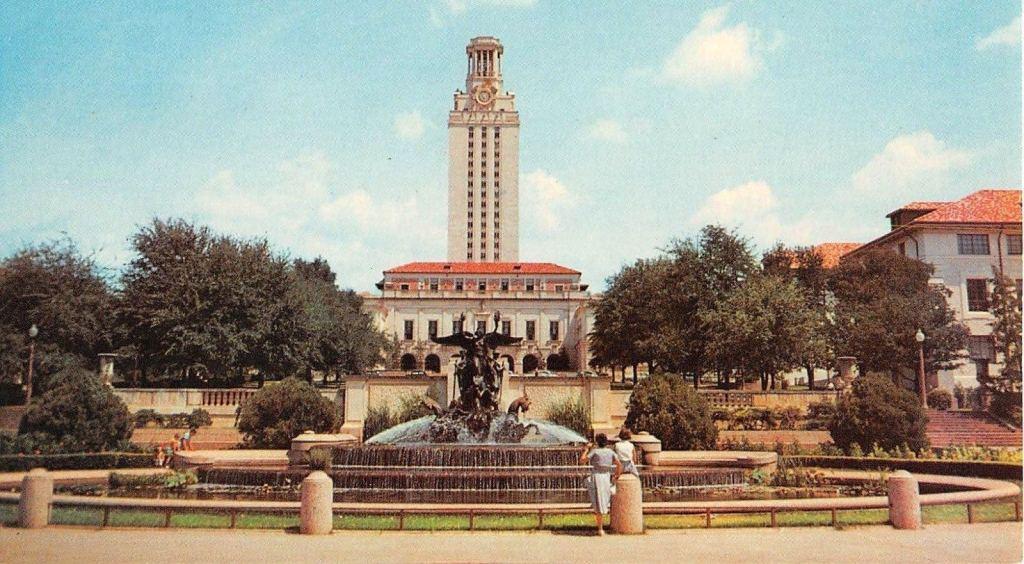
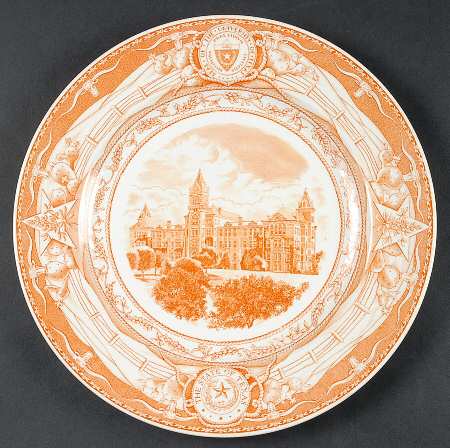
Margaret, as usual, served baked chicken cacciatore, deftly handling multiple casserole dishes in and out of the oven, and spooning out large portions onto orange Wedgwood plates that featured detailed images of the University campus: the old Main Building (pictured), Gregory Gym, the UT Tower, Littlefield Fountain. Only later did we learn that the plates dated from 1937 and were actually expensive collectables. “What building is this?” someone would ask. “That’s old B. Hall, Margaret explained. It’s not on campus anymore, but let me tell you about it.”

Along with endless helpings of cacciatore – “Getcha some more. There’s plenty!” – Margaret provided salad and green beans. Bottles of soft drinks, cups, and ice were lined up on the kitchen counter, “and there’s tea in the refrigerator. Remember, T-sips drink tea.”

After dinner, the group gathered in the den to hear Margaret relate a bit about her student days at the University, her time as Associate Dean of Students, and give unsolicited but well-received advice. “Get involved on campus. Take on leadership roles in your group,” she encouraged. “Get to know your professors!” she admonished. “It’s a big university; explore every part of it you can,” she counseled. To her thirty to forty student guests, she was greeter, hostess, chef, historian, advisor, and life coach all at once. And she played each role effortlessly, and with a sincerity that left her guests inspired. “Dr. Berry is quite a lady,” one of my student friends remarked on the way home.

~~~~~~~~~~

A fourth-generation Texan, born August 8, 1915, Margaret Catherine Berry was raised in the tiny town of Dawson – about 30 miles northeast of Waco – and showed her academic prowess early by graduating from high school as co-valedictorian. Along the way, Margaret also learned well what it meant to be Texas friendly, something she shared in abundance with everyone.

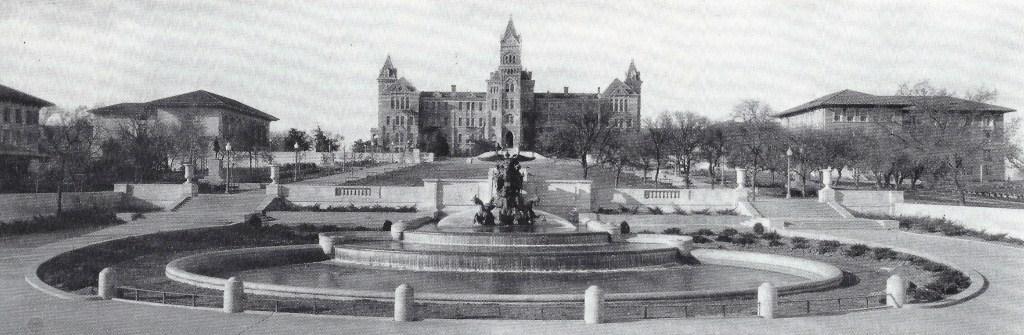
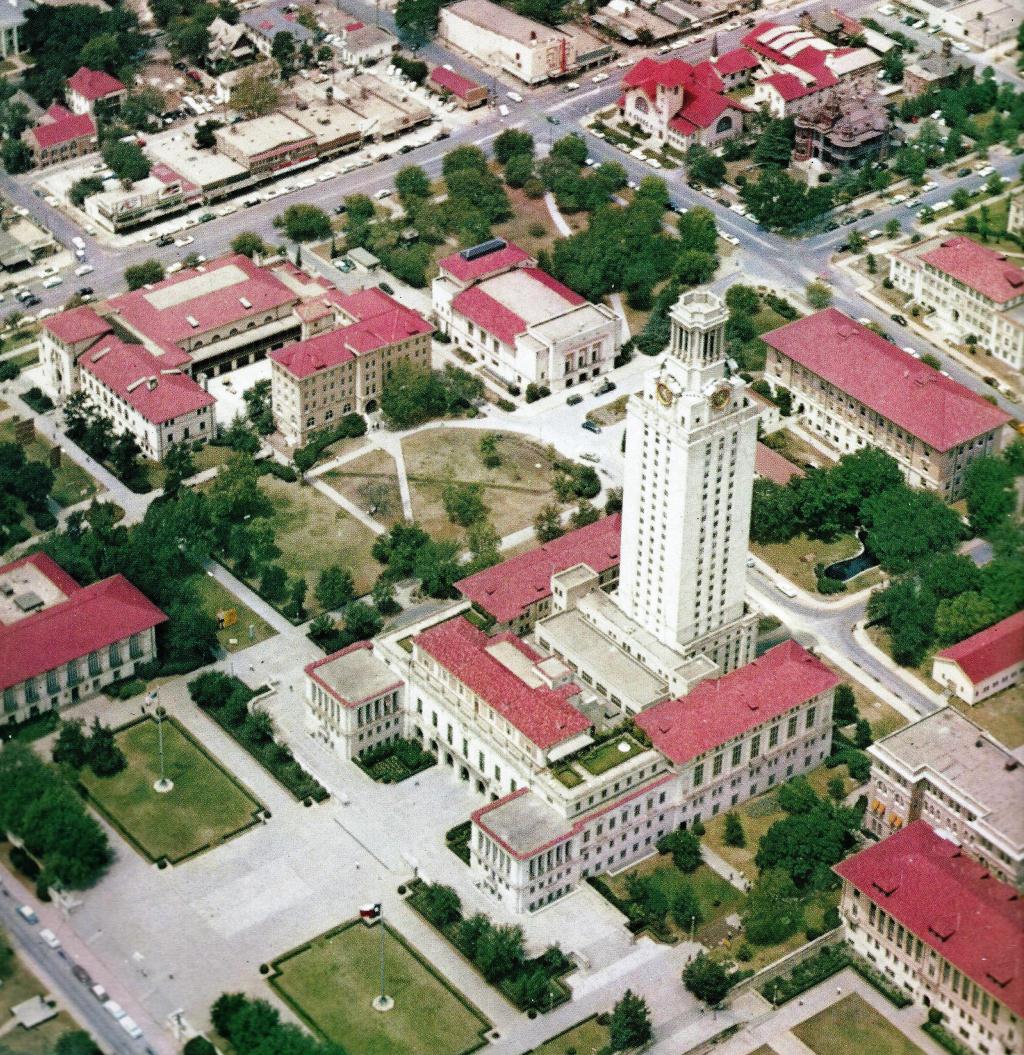
Above: The UT campus in 1933, Margaret Berry’s freshman year. The old Main Building still stood on the top of hill, while the Littlefield Fountain was new.

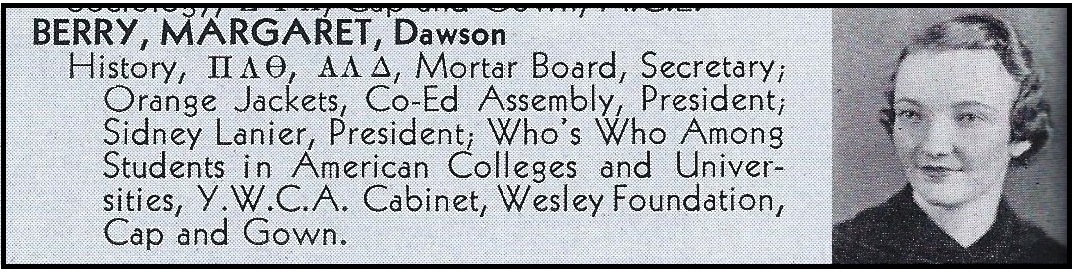
A freshman on the University of Texas campus in 1933, some of Margaret’s first semester classes were held in the old Main Building, just before it was closed and razed. Along with her studies, she joined the Y.W.C.A., Mortar Board, and was especially active with the Orange Jackets. Four years later, in the spring of 1937, Margaret graduated with a degree in history, having witnessed the dedication of a new Main Building and Tower just months beforehand.

Above: Margaret Berry’s senior photo in the 1937 Cactus yearbook.

For a few years, Margaret taught in public schools along the Gulf coast – El Campo, Freeport, and Galveston – while spending summers at Columbia University in New York to complete her master’s degree in education. One summer she worked for Newsweek magazine and seriously considered remaining in the Big Apple, but Texas beckoned for her return.

In 1947, she was appointed Dean of Women and an instructor of history at Navarro Junior College, and then became Dean of Women at East Texas State Teachers College (now Texas A&M University – Commerce) in 1950. For the next decade, Margaret was a legendary figure on East Texas State campus, She was called the “lean dean,” or the “mean dean” – depending on the circumstances – and knew each coed’s GPA, whom they were dating, and if they’d violated any dorm curfews.  At the same time, Margaret took a deep interest in the education of her students and strived to be a role model for everyone.

In 1961, Margaret finally returned to Austin and juggled three responsibilities. She’d been appointed Associate Dean of Women at the University of Texas, was caring for her aging parents, and decided to complete her doctorate degree in education at Columbia.

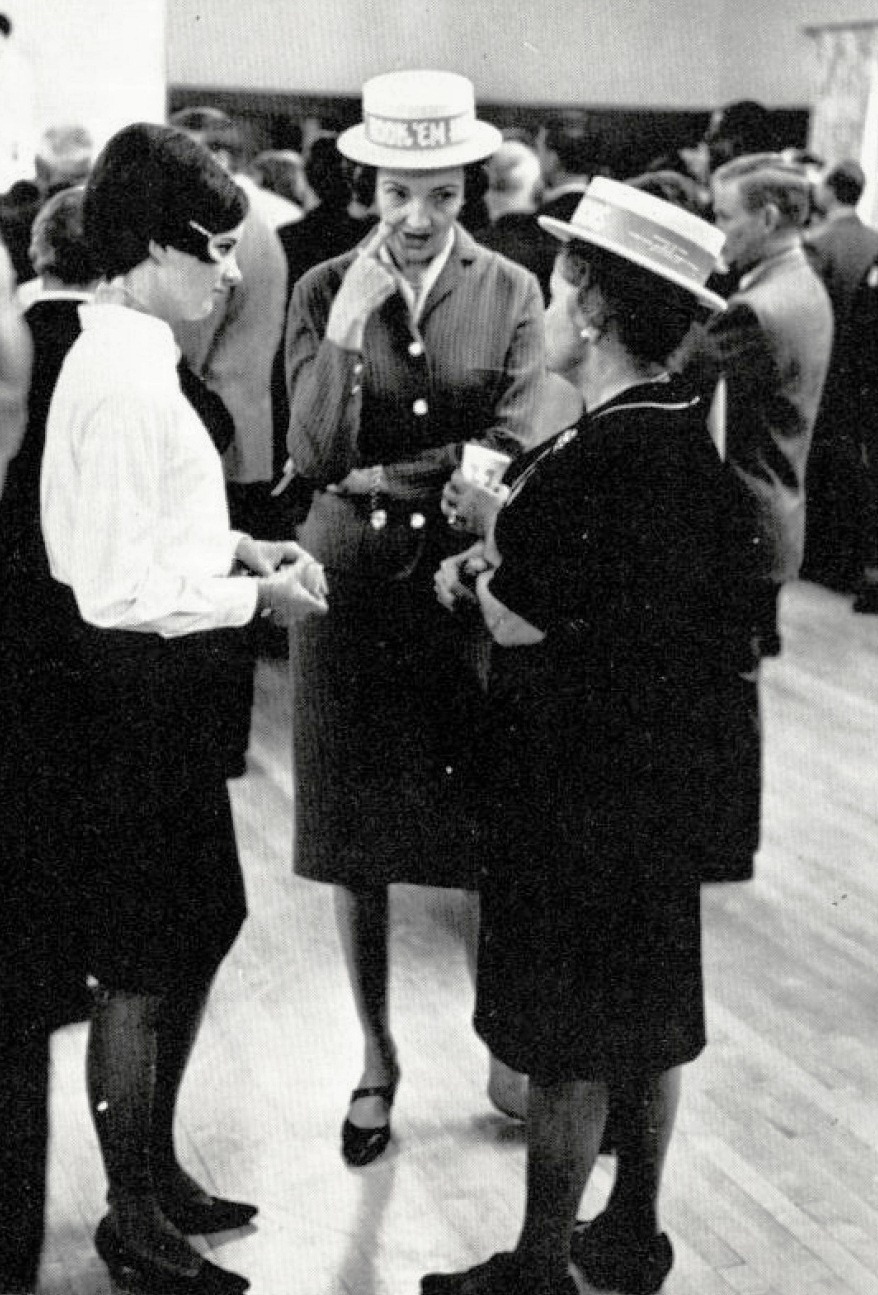
Above left: Margaret Berry at a 1967 Texas Union event. That’s a straw hat on her head with “Hook ’em Horns!” in large letters. 

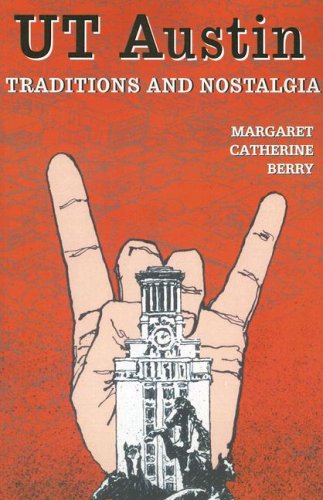
Margaret finished her dissertation in 1965, Student Life and Customs at the University of Texas: 1883-1933. It was the first survey of UT student life, required many hours of research in the University’s archives, and instilled a deep understanding and appreciation for the University of Texas. “What is a university? Like any living thing, an academic institution is comprehensible only in terms of its history,” said former Harvard president James Conant. Margaret understood this all too well. Her dissertation later became the foundation for her book, UT Austin: Traditions and Nostalgia, a staple in bookstores along the Drag for decades.

As part of the Dean of Students office, Margaret was best-known for her course “Self and the Campus Society.” It was intended to prepare UT students for leadership positions on campus and after graduation, but her infectious enthusiasm for the University, and the example she set as doing her best and always thinking of others, garnered Margaret a legion of adoring fans. “I thought you were the quintessence of a lady and a scholar,” wrote one of her students many years later. “Indeed, you have become my living definition of those two words, and my highest aspiration is to be a fraction of the example you set.”

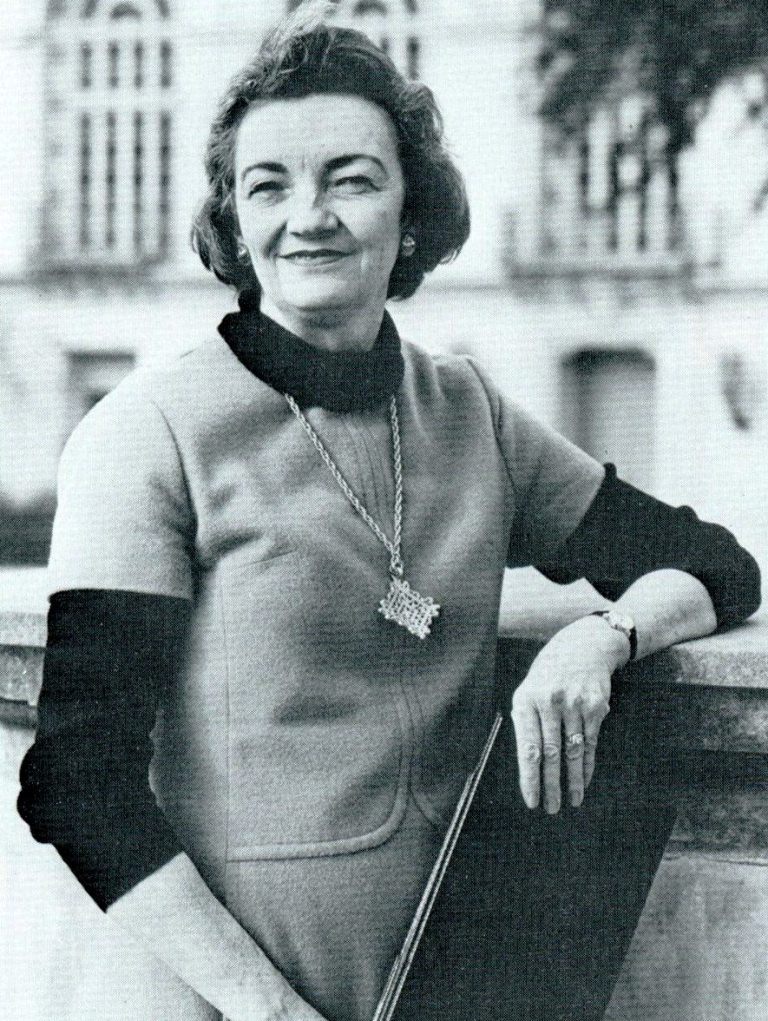
Above right: Margaret Berry, as Associate Dean of Students and Developmental Programs Director, posed in front of Battle Hall in 1973.

In addition to her course, Margaret created the first telephone counseling service for UT students, authored the first handbook of student rights and responsibilities, was a regular speaker at the summer Honors Colloquium and freshman orientation, and volunteered as an advisor for student organizations.

In the 1970s, former UT Chancellor Harry Ransom asked Margaret to assemble an illustrated history of the University. The book, published by the UT Press, appeared in 1981. She also authored Brick by Golden Brick (a resource compilation on UT buildings), UT History 101, and The University of Texas Trivia Book, as well as histories of the Scottish Rite Dormitory and University United Methodist Church.

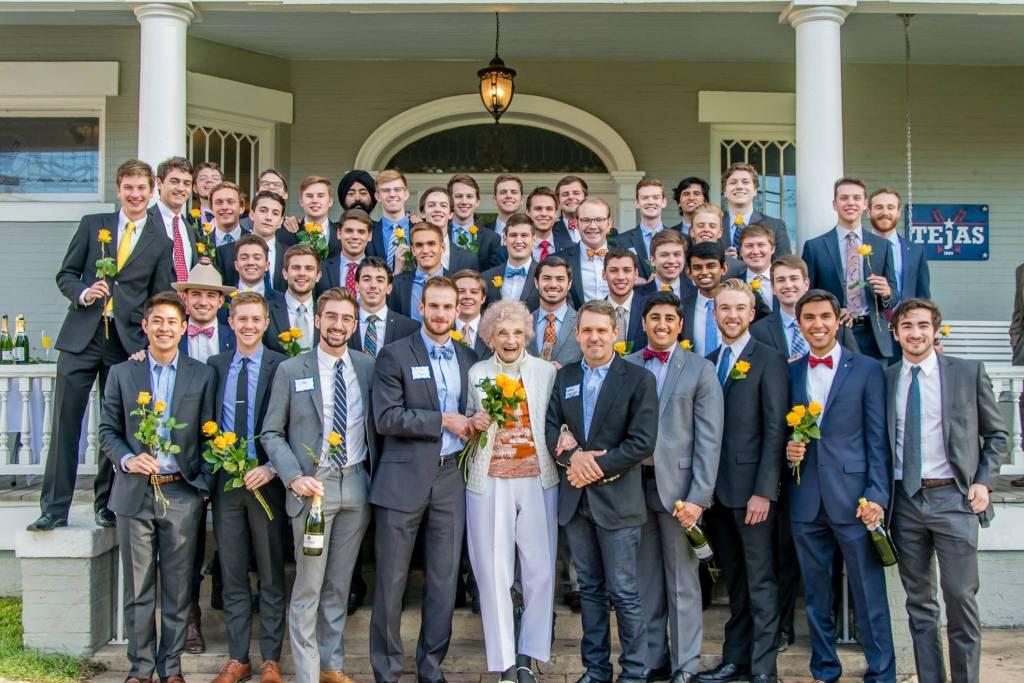
Though she officially “retired” in 1980, Margaret continued to be a popular personality on the Forty Acres and in Austin. She served as president of the Austin Woman’s Club and the Retired Faculty-Staff Association, was indispensable on the Texas Exes Scholarship Committee and UT Heritage Society, and was an active volunteer with the University United Methodist Church. In March 1981, the men of the Tejas Club, a student organization, asked her to be the guest speaker at the first annual Texas Independence Day Breakfast for faculty and students. The tradition continued through this year, when Margaret led the assembly in a “Toast to Texas.” (A decade ago the Club made her an honorary member.) In 1995, at the request of the provost’s office – and at the spry age of 80 – Margaret agreed to teach a freshman seminar from 1995–2002.

Above: March 2, 2017 – a 101-year old Margaret Berry is surrounded by members of the Tejas Club after the Texas Independence Day breakfast to honor UT faculty and students.

Her contributions didn’t go unnoticed. Both the Orange Jackets and Texas Exes have endowed scholarships named for her, and she was awarded the Arno Nowotny Medal, given to staff of the Division of Student Affairs “who render meritorious service.” In 1996, Margaret was a recipient of the Distinguished Alumni Awards, the highest honor afforded by the Texas Exes, and in 2004 was dubbed Austin’s Most Worthy Citizen. In April 2012, the atrium in the newly-completed Student Activity Center was named in her honor, and at the dedication ceremony, Austin Mayor Lee Leffingwell officially declared it “Margaret Berry Day” in the city.

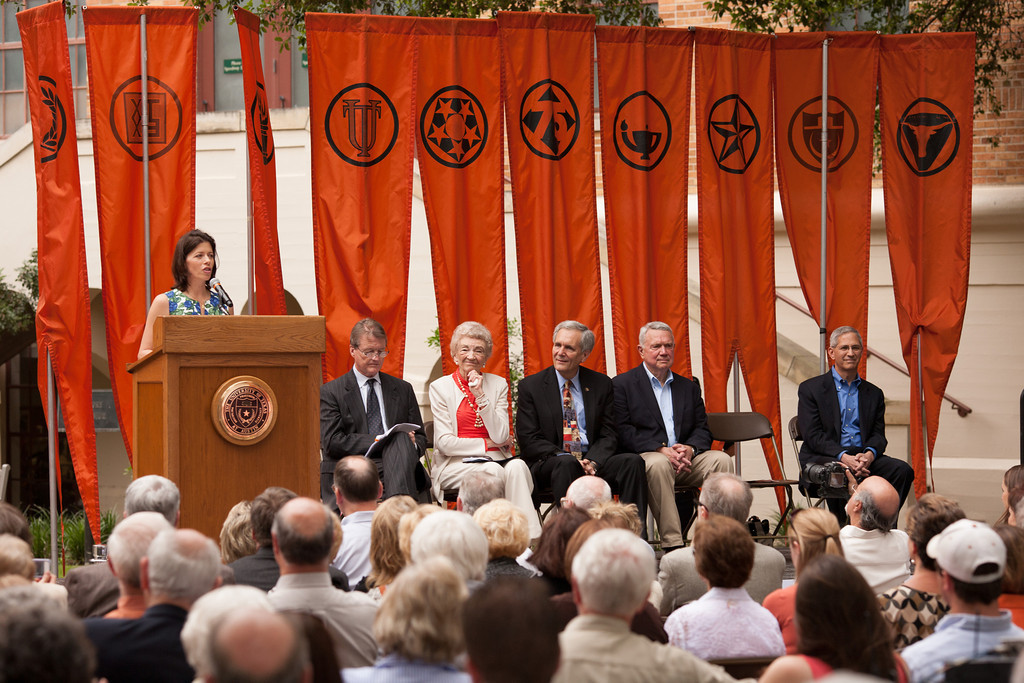
In April 2012, the Longhorn Band, UT cheerleaders, and an overflow crowd attended the dedication ceremony of the Margaret Berry Atrium in the Student Activities Center. Margaret is seated with UT President Bill Powers on the left, and Congressman Lloyd Doggett and Austin Mayor Lee Leffingwell on the right.

~~~~~~~~~~

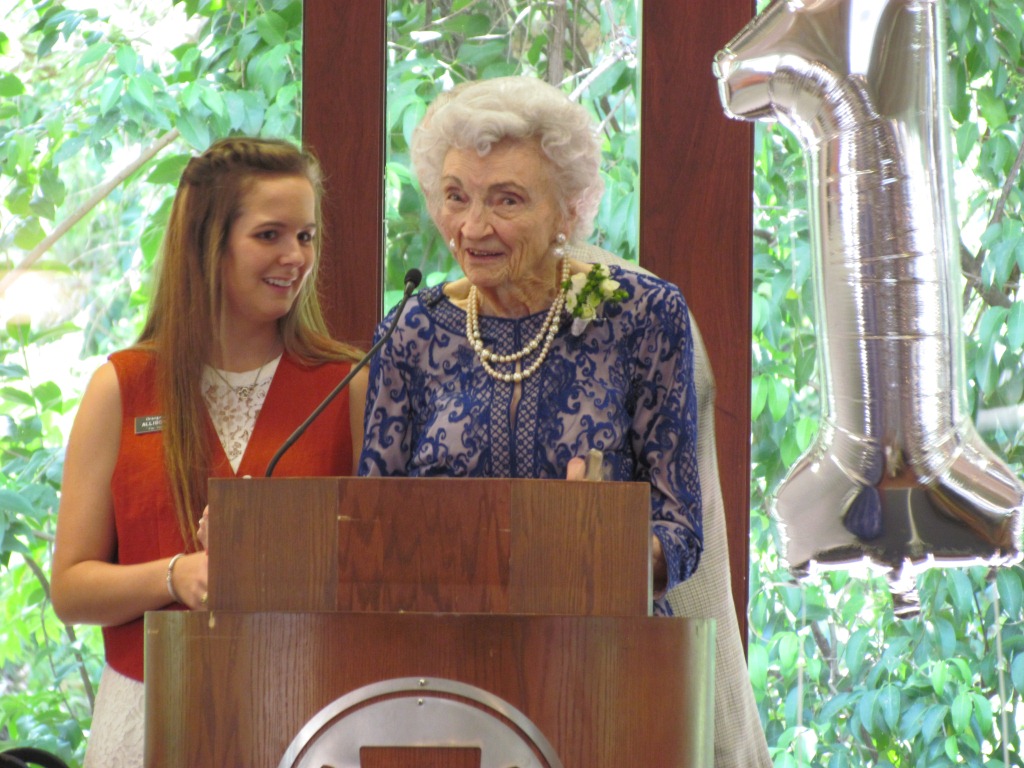
On August 8, 2015, Margaret Berry marked her 100th lap around the sun. Hundreds of former students, University colleagues, and Austin friends gathered at the alumni center to help her celebrate. Like a Christmas Santa at a shopping mall, everyone waited in line to take a turn, sit with Margaret for a photograph, and tell her how much they loved her and the positive impact she’d had on their lives. As part of the formal program, UT President Greg Fenves arrived with a surprise. Margaret had planned to leave the University a $50,000 bequest to endow a scholarship in religious studies named in honor of her parents, but her friends had been busy and raised more than twice that amount. President Fenves officially announced the creation of the Lillian and Winfred Berry Endowed Presidential Scholarship.

Above: Margaret Berry at her 100th birthday party, August 8, 2015.

Margaret approached the podium and, with tear-filled eyes, said “thank you,” but, truly, it was the University community and her many friends, generations of UT students touched by her spell, who, collectively, were trying to express their gratitude to her.

Yes. Dr. Berry was indeed quite a lady.

1952: A Handbook for Greenhorns

Browse the 1952 Freshman Orientation Guide

~~~~~~~~~~

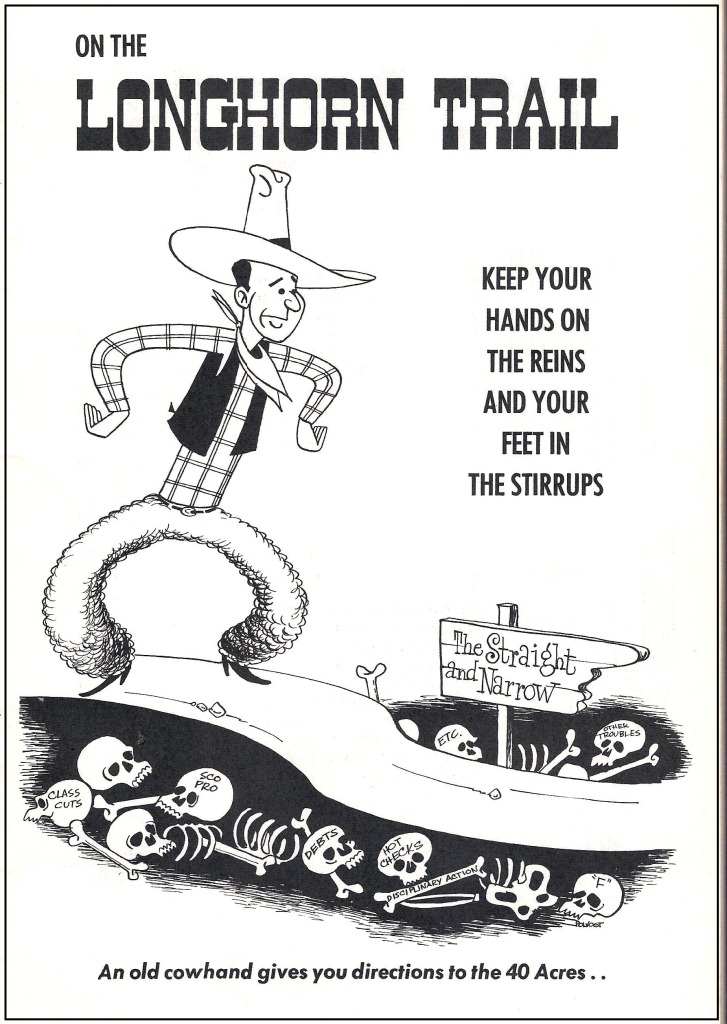
Recently, I acquired a copy of the 1952 freshman orientation booklet: A Handbook for Greenhorns. Authored and illustrated by a student committee, its pages provide an interesting glimpse of campus life 70 years ago. Below are just a few excerpts, including registration in the un-air conditioned Gregory Gym, 8:30 p.m. curfews for freshmen women, a free “charm school” in the Texas Union, and a new “no smoking” rule in classrooms.

  • From Student to Student . . .

“You’re a University student now. But you’re not a University of Texas student. You haven’t got that knot inside that makes you a Longhorn. You don’t know what it is now, but you will.

“Maybe it’ll come to you when you’re strolling across the campus under a star-laden sky; or maybe in the evening when you short-cut across the southwest corner and hear the crickets; or maybe at a football game; or maybe it’ll just grow on you.”

“Try to keep two things in mind.

“First, be aware. Aware of the way you feel the minute you feel that way – -of the kicks at the game, the laughs at a student comedy, the inner passion inspired by a symphony, the warmth of a friendship, the simple pleasures of living a college life.

“Other thing is, cash in while you can. The best you can hope for at any college is to continue learning – – not to conclude your learning, but to continue it. If you cash in now – –  cash in on the knowledge that’s here for you – – then later on, you’ll have the knack of knowledge and go right on getting it; and maybe, still later, wisdom.”

  • First Daze at U.T.

“Yes, with your first look around the Forty Acres, everything seems big – – if not a little confusing.

“Everybody has a tough time getting through first registration.  . . . The simplest way to get out of a jam is the best way. Just walk up to somebody and ask them what to do, where you should go, or whom you should see. Folks are naturally friendly at the University, like everywhere else in Texas. Collar somebody and start talkin’.”

  • Gotta Place to Live? . . . Where You Hang Your Hat

“All undergraduates will live in University approved residences unless special permission is granted to live elsewhere.

“You women will have certain housing rules which must be followed –

“First-term freshman women may have 3 nights out a week after 8:30. Any evening spent out after 8:30, even though you were studying in the library or attending a club meeting, is counted as a night out. Your residences will be closed at 11 o’clock every night except Saturday when 12:45 is the deadline.

“You men should be familiar with these rules, too, because it will be part of your responsibility to get your date in on time.”

Above: Mezes, Batts, and Benedict Halls – along the east side of the South Mall – were constructed as a single project and opened in 1952.

  • Hard Cash . . .

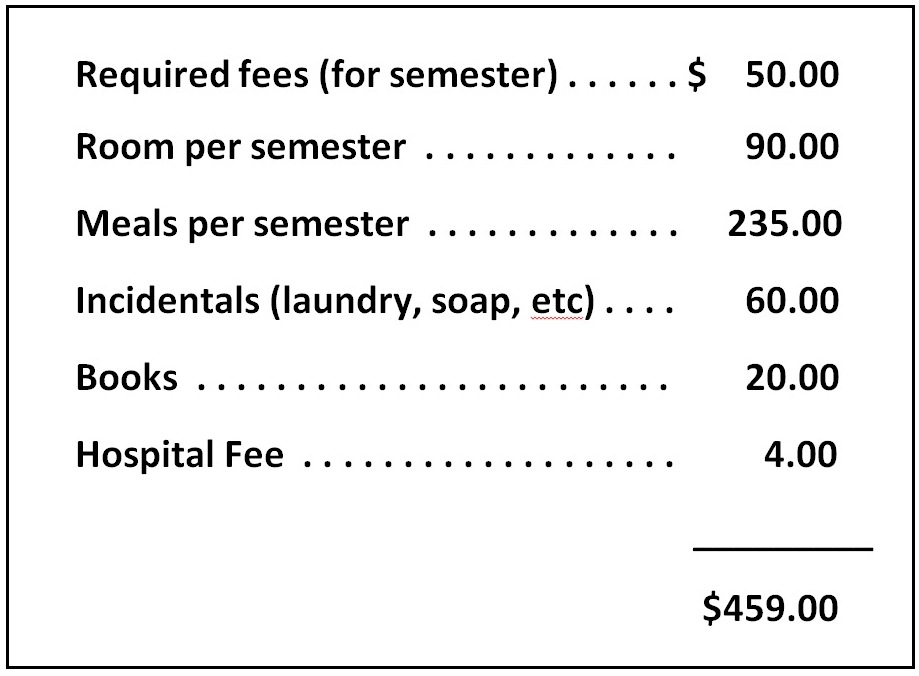
“In order to give you an idea of the probable expense of going to the University, let us assume that you are a Texas resident, taking one lab course. You live in a rooming house, and eat your meals at the Commons [the Texas Union]:

“You must remember that this is a minimum, and does not include money for clothes, dating, cigarettes, cokes, and other ‘necessary’ expenses.”

  • What Students Do

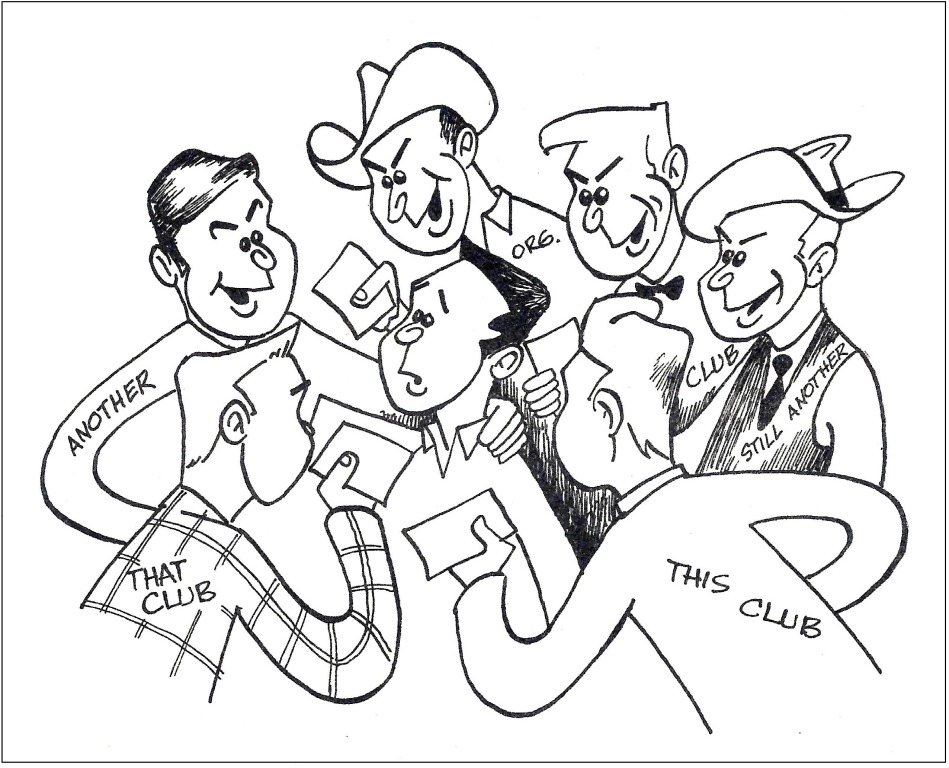
“It is important to be a member of some groups, meet new people, and go to their social function – – but, take it from an old hand, choose your clubs carefully and only join those in which you have time to participate actively and which interest you most. There are more than 250 clubs of every description on campus.”

  • Student Sports

For men –

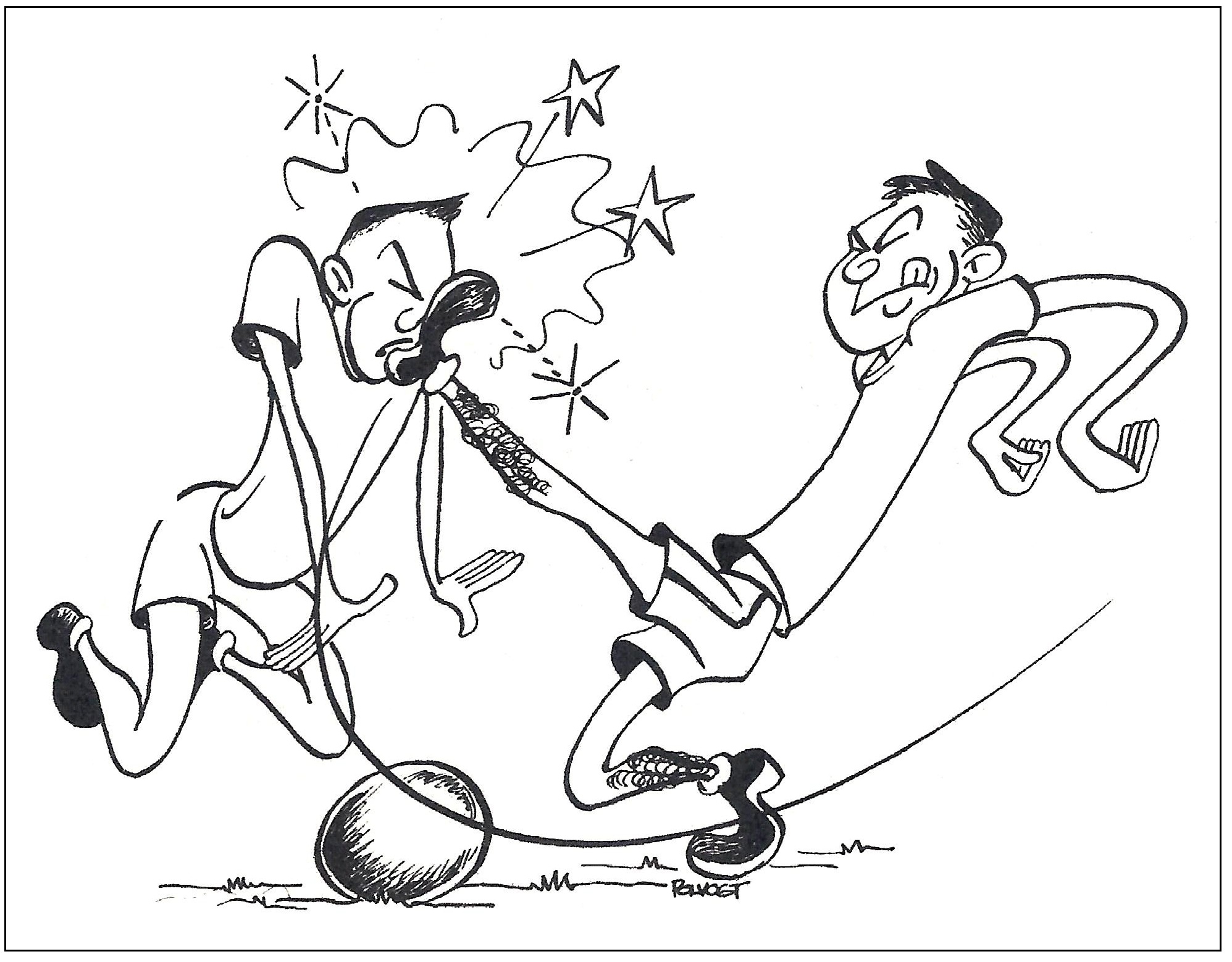
“The boys puff out their manly chests when they say the University is generally recognized as having one of the best all-round intramural programs for men in the entire country. The latest addition is lights for the Intramural Field. And to brag some more: These are the only ones of their type in this section of the country. Spectators who shout loudly and clap obnoxiously are welcome at all games.”

And for women –

“Besides regular gym classes, any girl with the required health grade can try out and perhaps become a member of a UTSA (University of Texas Sports Association) club.

“What’s your choice? There’s Bow and Arrow (archery), Canter Club (riding), Orchesis (modern dance), Poona (badminton), Racket Club (tennis), Strike and Spare (bowling), Tee Club (golf), Touche (fencing), Tumbling, and Turtle Club (swimming). UTSA is under guidance of Miss Anna Hiss, Director of Women’s Physical Training.”

  • Students’ Association

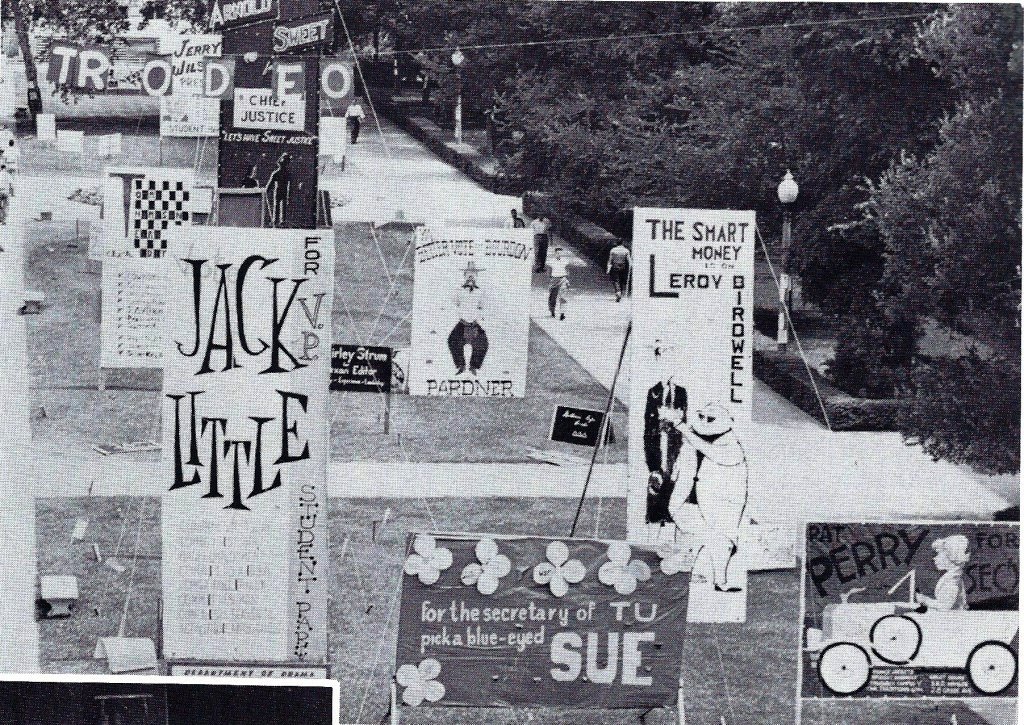
“The Students’ Association elects representatives for its student government both in the fall and in the spring. Assemblymen are elected in the fall, whereas the most colorful election is the one in the spring, when the president and other student body executive and judicial officers are decided. Colorful campaigning, with signs, stunts, and serenading add to the spirit of elections.”

Above: For several weeks each semester, the all-grass West Mall was filled with enormous – and creative – campaign signs for student government. Click on an image for a larger view.

  • ‘tenshun!

“The University of Texas is one of the few colleges in the country which has ROTC units of all three branches of our Armed Services: Army, Navy and Marine Corps, and Air Force.

“The objective of the ROTC programs is to develop the attributes of character, personality, and leadership which are indispensable to every college graduate, whether he remains a civilian upon graduation, or makes a career of the service.”

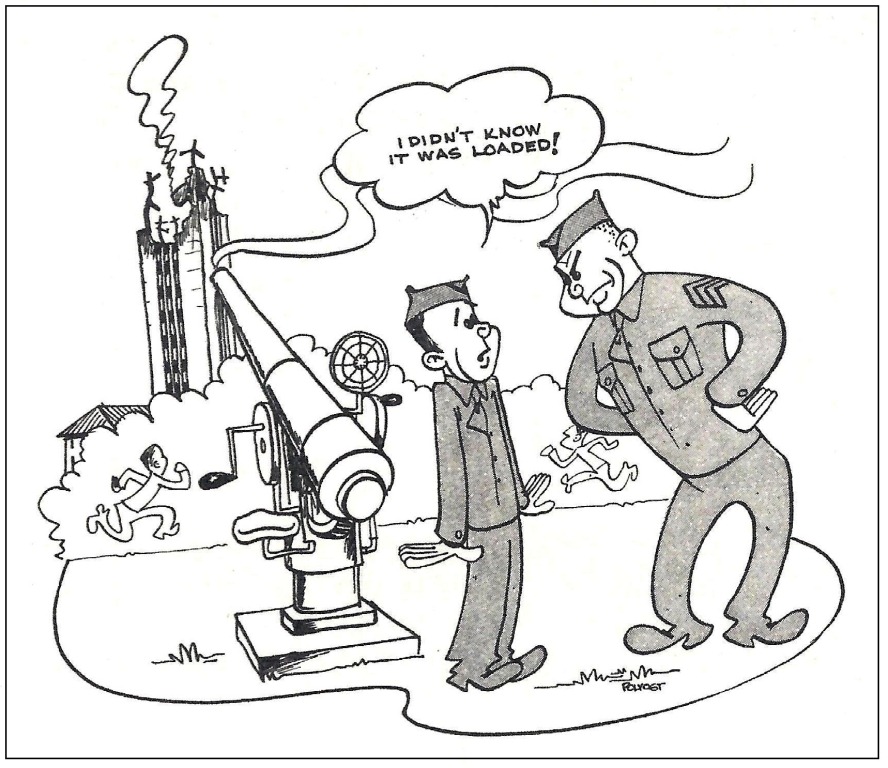
Left: The cartoon scene in this section of the freshman handbook wasn’t entirely fictional. From World War II until the 1957 completion of the ROTC Building on the East Mall (later named Russell Steindam Hall and now replaced by the Liberal Arts Building), the Naval ROTC was headquartered in the Littlefield Home, with a pair of anti-aircraft guns placed on each side of the front entrance. And in full view of the Tower.


  • Student Life Centers . . .

“You will find a ‘home away from home’ here at the center of student activities. Just a few of the conveniences offered a Lost and Found department, free dance classes, ping pong, chess, card playing, checking service, and television. In addition Pep rally dances, Friday Frolics, Talent Nights, and weekly movies are given free throughout the school year. Your Union offers bridge lessons, pop lectures, student-faculty discussions called Coffeorums, and frequent appearances of nationally known speakers.

“Students plan all activities through the work of ten committees. The Charm Committee offers a co-ed charm school and style show each semester. The Free Dance Committee handles the dances. The Talent Committee keeps a file of campus talent and provides programs for various groups.

“Besides offering numerous activities, you can find popular magazines, soft drinks, candy, cigarettes, and newspapers from all over the state. You paid your dollar Union fee this semester for the use of all of these facilities.”

Above: Opened in 1933, the Texas Union was the original campus center of student activities. Much of the first floor housed the “Commons,” a large University-wide cafeteria.

  • Traffic Regulations

“Since the 40 acres small parking on the campus is limited to those holding permits. These parking privileges are restricted are restricted to the faculty, staff and disabled students. Parking after 4:30 Friday, after 1:30 Saturday, all day Sunday is open to anyone who can find a place to park.”

  • There is a Place to Walk . . .

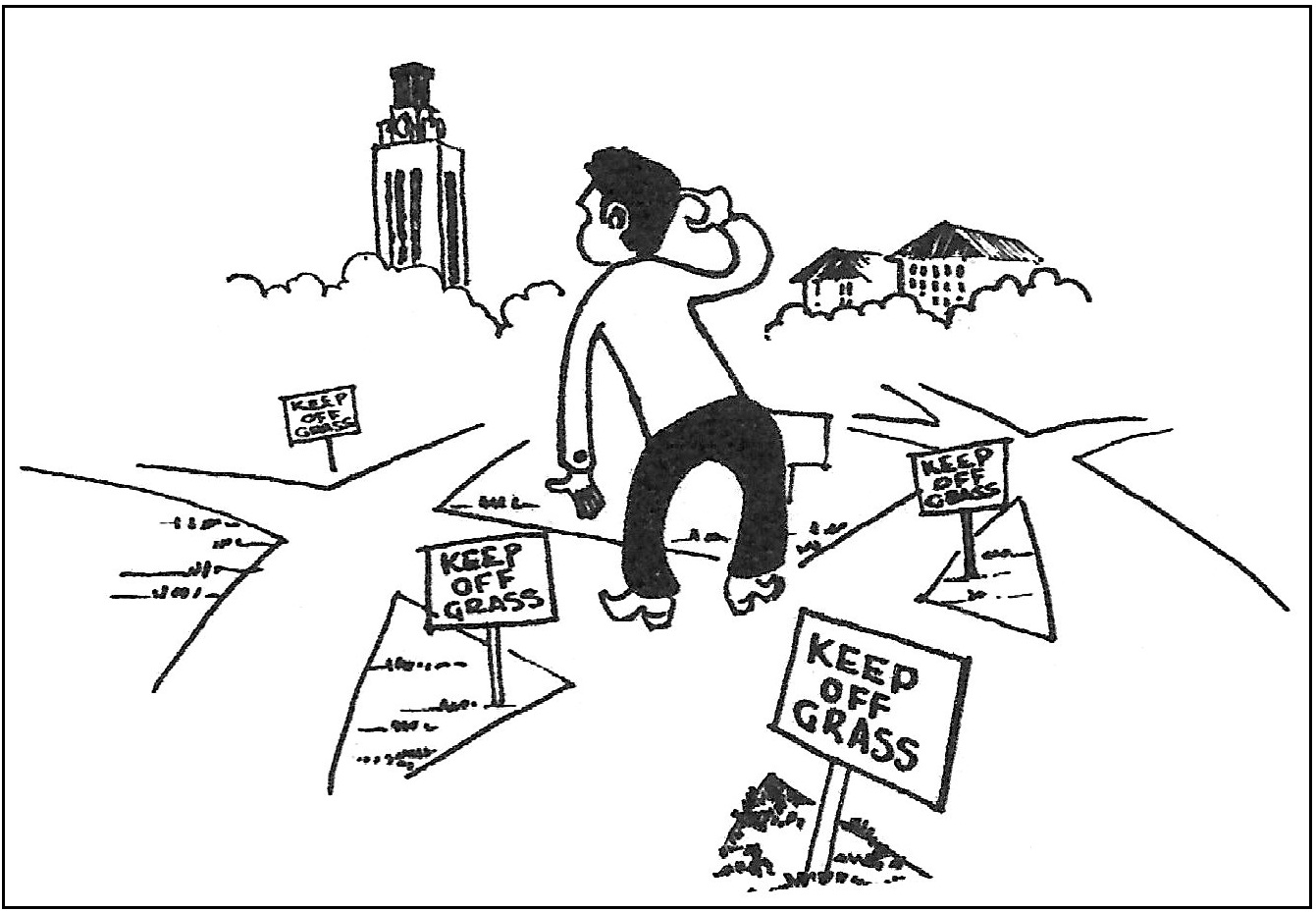
“This last year, many feet of side walk were put down so that you would be able to walk from place to place without getting your feet muddy (or ruining the grass). These walks were planned so that you will be able to get from one place to another without crossing any shrubs, flowerbeds or the like. In many cases they were laid over paths that students had worn through finding the shortest distance between two points. So as you establish your paths from building to building, conform to the walks and help keep our campus beautiful. “

  • And a Place to Smoke!

“You may be one of those students who feel uncomfortable without a smoke in your hand. If so, start curbin’ that desire as a rule was passed this last year prohibiting smoking (or beverage drinking) in the class rooms and other specified areas. So look before you smoke!”

  • Longhorn Yells and Songs

Above: As lights weren’t installed at the football stadium until 1956, home games were usually held at 2 p.m. Saturday afternoon. From the right seat, a Longhorn fan watched the game framed between two Austin landmarks: The UT Tower and the Texas Capitol.

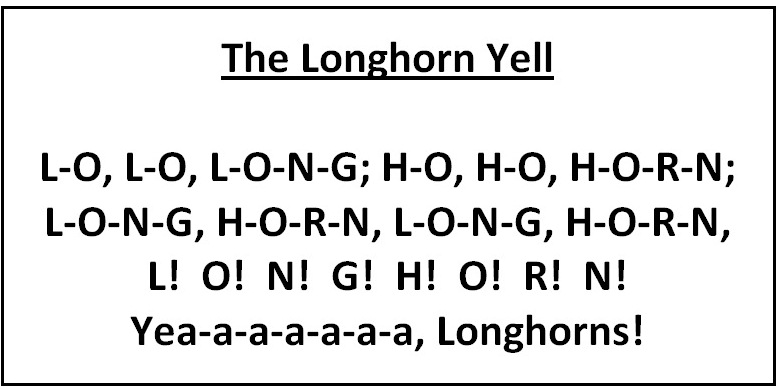
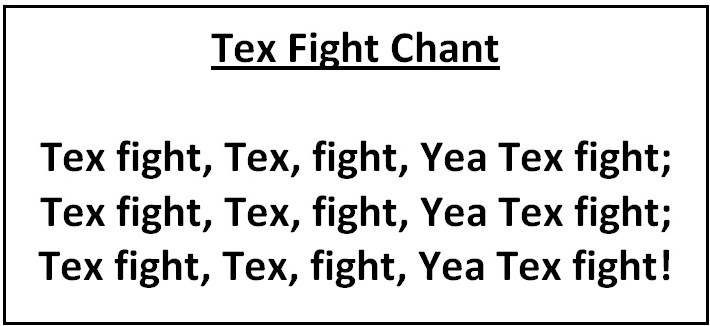
Along with “The Eyes of Texas” and “Texas Fight,” UT students in 1952 had several favorite college yells. A pair of them – the Tex Fight Chant and Color Yell – were later incorporated into the Texas Fight song.