Audio Comes to the UT History Corner

???????????????????????????????

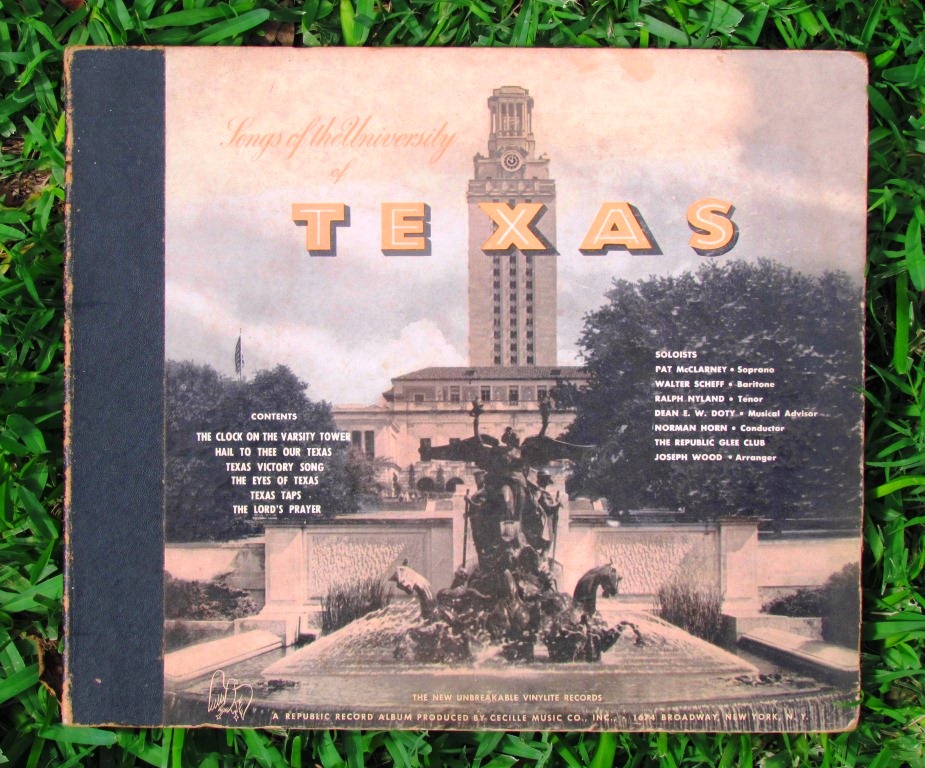
With a battered and worn cover after more than seven decades, Songs of the University of Texas contains early recordings of UT favorites, along with some tunes that haven’t been heard on the campus since the 1950s.

The UT History Corner is more than a blog; it’s intended to be an expanding resource for those interested in exploring the University’s past. To compliment the traditions, images, and resource areas already on the web site, a new audio section has been added.

Songs of the University of Texas is a three-record set of 78rpm discs recorded sometime in the mid-1940s. Curiously, the songs weren’t performed by a UT student group, but arranged and recorded in New York City by the Republic Glee Club, whose members were often heard on popular national radio shows. E. William Doty, the first dean of UT’s College of Fine Arts (and who held the post for 34 years), is listed as “Musical Advisor.”

A pair of tunes will be familiar: The Eyes of Texas and Texas Taps (better known today as Texas Fight!). While the songs were arranged specifically for the New  York performers, the age of the recording still might tell us a little as to how the songs were initially sung.

The other three selections are: The Clock on the Varsity Tower, Hail to Thee our Texas, and The Victory Song. John Young, a 1940 fine arts graduate, wrote Clock as a ballad to his sweetheart. The two met on the Main Mall in front of the Tower, and the clock chimed just as they were introduced. The composer of Hail to Thee is unknown, though the song has the feel of a traditional, Ivy League college piece, sung by an a Capella choir in a grand auditorium. The upbeat Victory Song by George Hurt was used as a second UT fight song, and was a staple at football rallies and games into the early 1960s before it disappeared.

1940 Songs of the Forty Acres

Along with the recordings, a 4 x 6 inch pamphlet, titled Songs of the Forty Acres, was printed at about the same time. It contains about 20 tunes, many of them Texas folk favorites – including Git Along, Li’l Dogies – but the music and words to the UT songs on the records are also included. Those pages have been scanned and posted to the audio section, so listen, sing along, or find a piano and play these old college songs yourself!

To listen to Songs of the University of Texas, click here.
Waggener Hall

?????????????????????????????????????????????????????????????

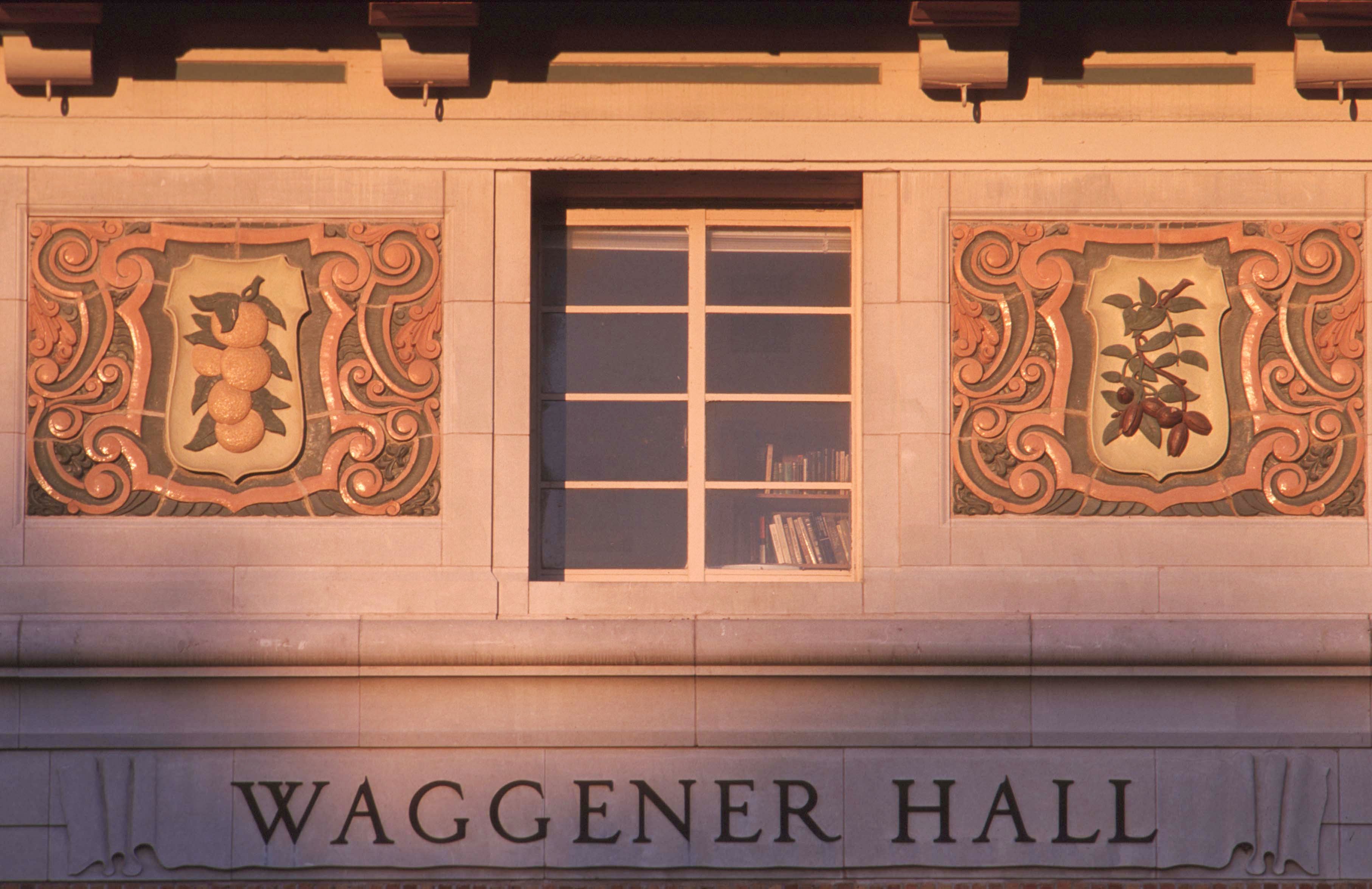
With images of oranges (left) and pecans (right), Waggener Hall was originally home to the School of Business Administration.

Down the hill and to the east of Garrison Hall, standing proudly along Speedway Street, is Waggener Hall. The building was named for Leslie Waggener, a professor of English and one of the first eight members of the faculty when UT opened in 1883. Waggener served as faculty chair for a decade, and as president ad interim in 1895.

Dedicated on April 15, 1932 at a cost of about $350,000, Waggener Hall replaced a series of cheap wooden shacks that once lined Speedway. They were initially built as barracks for World War I, and were refitted ( poorly) as classrooms as enrollment soared after the war.

Designed to blend in with the familiar Mediterranean Renaissance style of other campus structures, Waggener Hall was constructed of white limestone, multi-colored brick, and a broad red-tile roof. The clean lines and sharp details were a welcome addition to the Forty Acres, and the twenty-six terra-cotta medallions that adorned its walls sent a clear message as to the purpose of the building. Each represented an export of Texas at the time: oil, cotton, lumber, corn, pecans, and cattle, among others.

The building was ostensibly designed for the School of Business Administration, but for several years had to share its quarters with the English, math, and public speaking departments, along with an anthropology museum housed on the top floor. Business Dean John Fitzgerald had a library room installed on the north end of the second floor, today used by the philosophy department. Un-air conditioned until the late 1950s, classrooms were outfitted with ceiling fans, and windows were opened on warm days.

waggener-hall-architectural-image

Above: An architectural rendering of Waggener Hall. 

Waggener Hall.1930s

Above: A busy Waggener Hall in the 1930s.

1937-waggener-hall-typing-class

Above: Waggener Hall was home for business typing classes like this one in 1937.

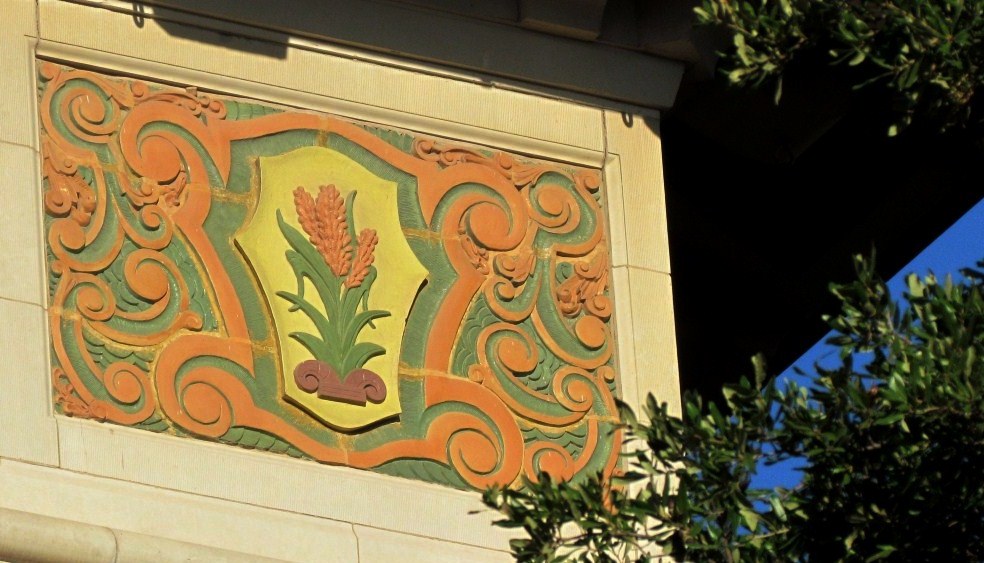
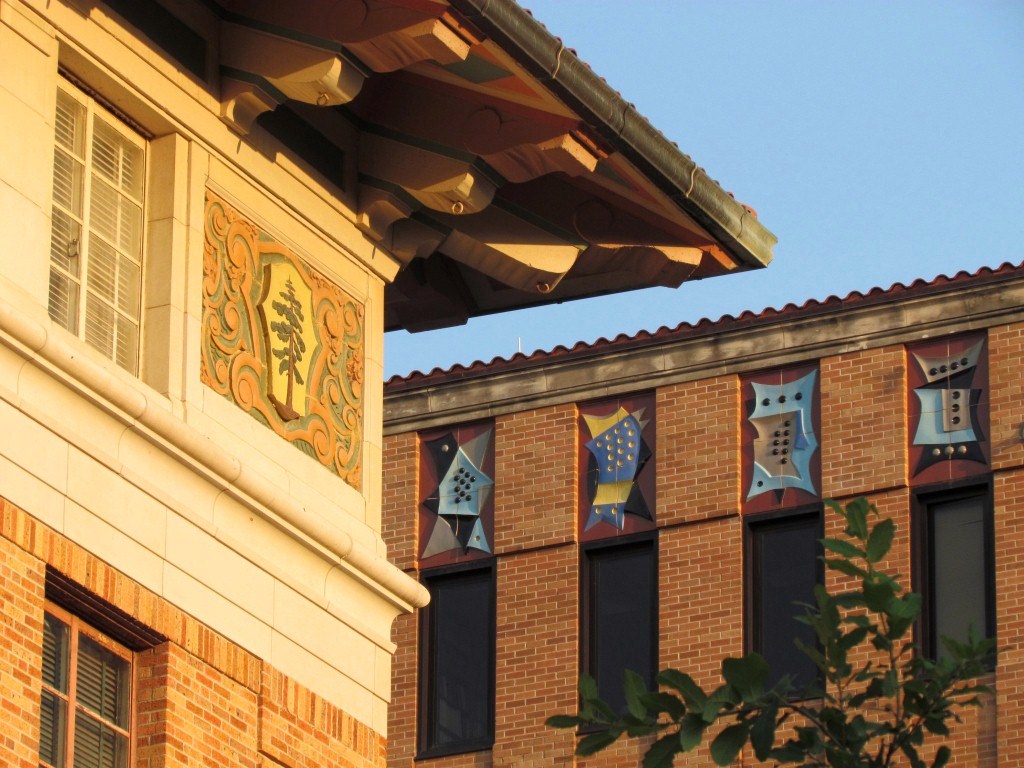
Just under the eaves of the building are twenty-six terra-cotta representations of Texas exports. Some are easy to recognize: an oil rig, cotton, pecans, and peaches. But there is also a tree, meant to represent lumber, bees for honey, and bricks and a trowel to indicate masonry.

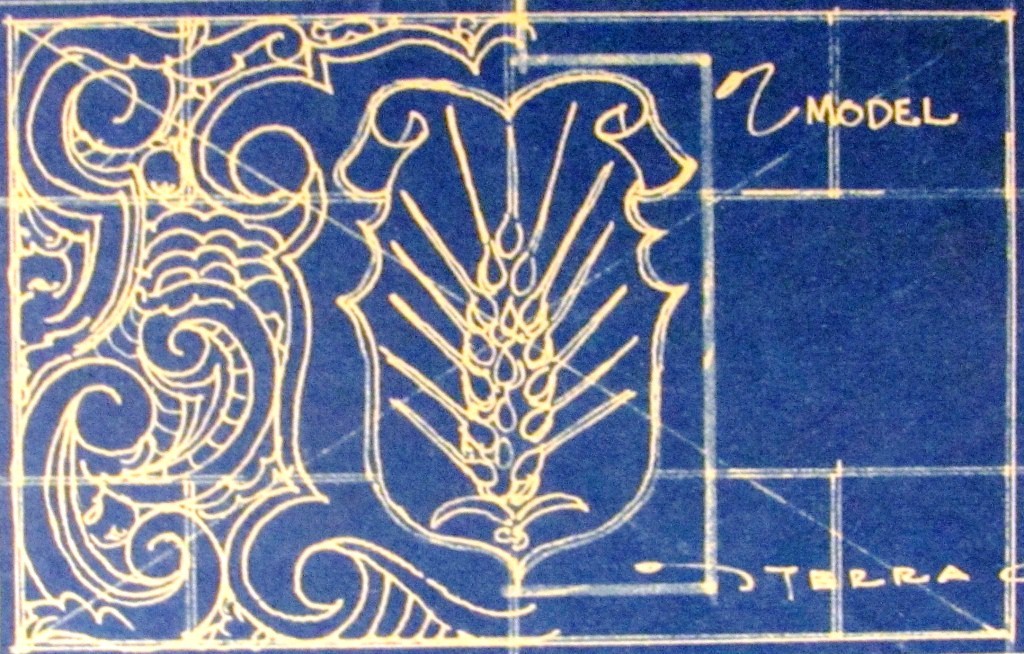
waggener-hall-wheat-architectural-drawing

Above: The architectural drawing for a terra-cotta medallion to represent wheat. The final designs were often different from the initial concepts, now seen on the northeast corner of the building (image below).

waggener-hall-wheat

waggener-hall-cotton

Above: Cotton has long been an important product of Texas. While most of the building’s ornamentation is agricultural, if Waggener Hall were designed today, a very different series of exports would be represented.

Business moved next door to the more spacious Business-Economics Building in 1962, and the Waggener Hall was remodeled for other uses. Today, the departments of philosophy and classical studies call the building home, and an extensive Classics Library can be found on the first floor.

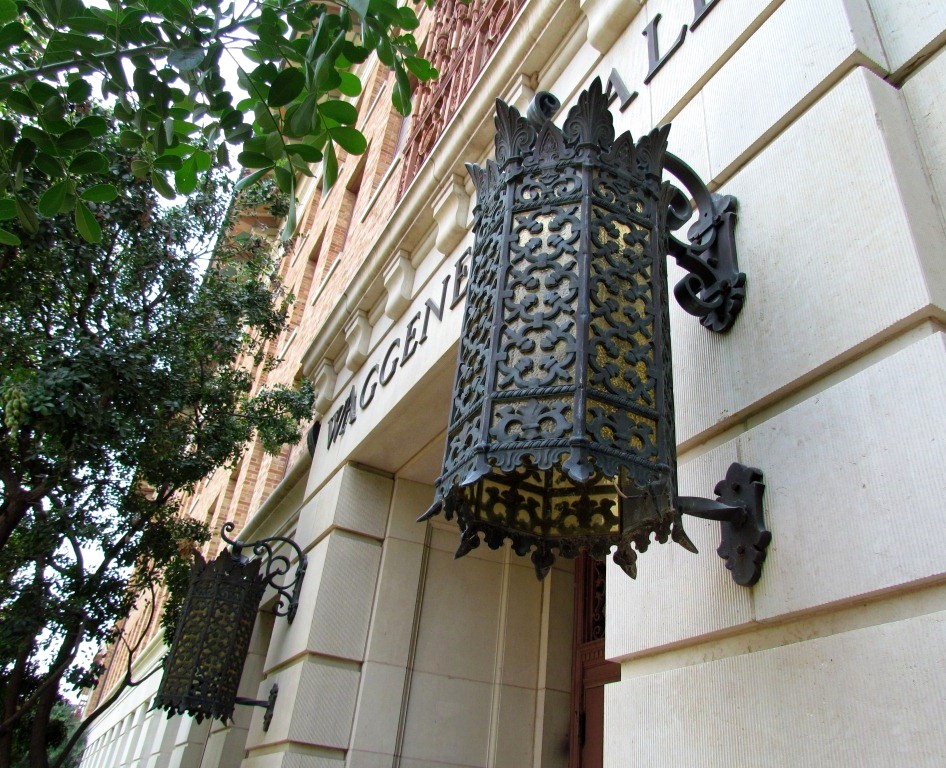
IMG_0642Above: Imposing Mediterranean light fixtures guard the east entrances to Waggener Hall. 

Waggener.Fallout Shelter ImagesAbove the doorways to the stairwells are signs that indicate Waggener Hall was once designated as a fallout shelter. A common sight on the campus at the height of the Cold War, these 1950s markers are among the very few that haven’t been removed or destroyed, and provide a layer of history to the building. (See “Better Hid than Dead” for a history of UT fallout shelters.)

Waggener Hall.Faculty Mail.May 18 2013.This ornate brass “faculty mail” box is found on the first floor, and is the last of its kind on the campus.

Waggener Hall and Business SchoolAbove: Old and new. Waggener Hall was headquarters for the School of Business Administration for three decades until it moved into the Business-Economics Building (today’s Kozmetsky Business Center) in 1962. While Waggener is adorned with Texas products, the colorful ceramic pieces on the current business building are meant to be more abstract. Created by retired UT art professor Paul Hatgil, the rows of small, raised circles were meant to be reminiscent of buttons, as the many inventions of the 1950s had transformed the modern world into what was then called a “push button society.”