Upcoming Tours for October

Moonlight Prowl.October 3 2014

Don’t forget!

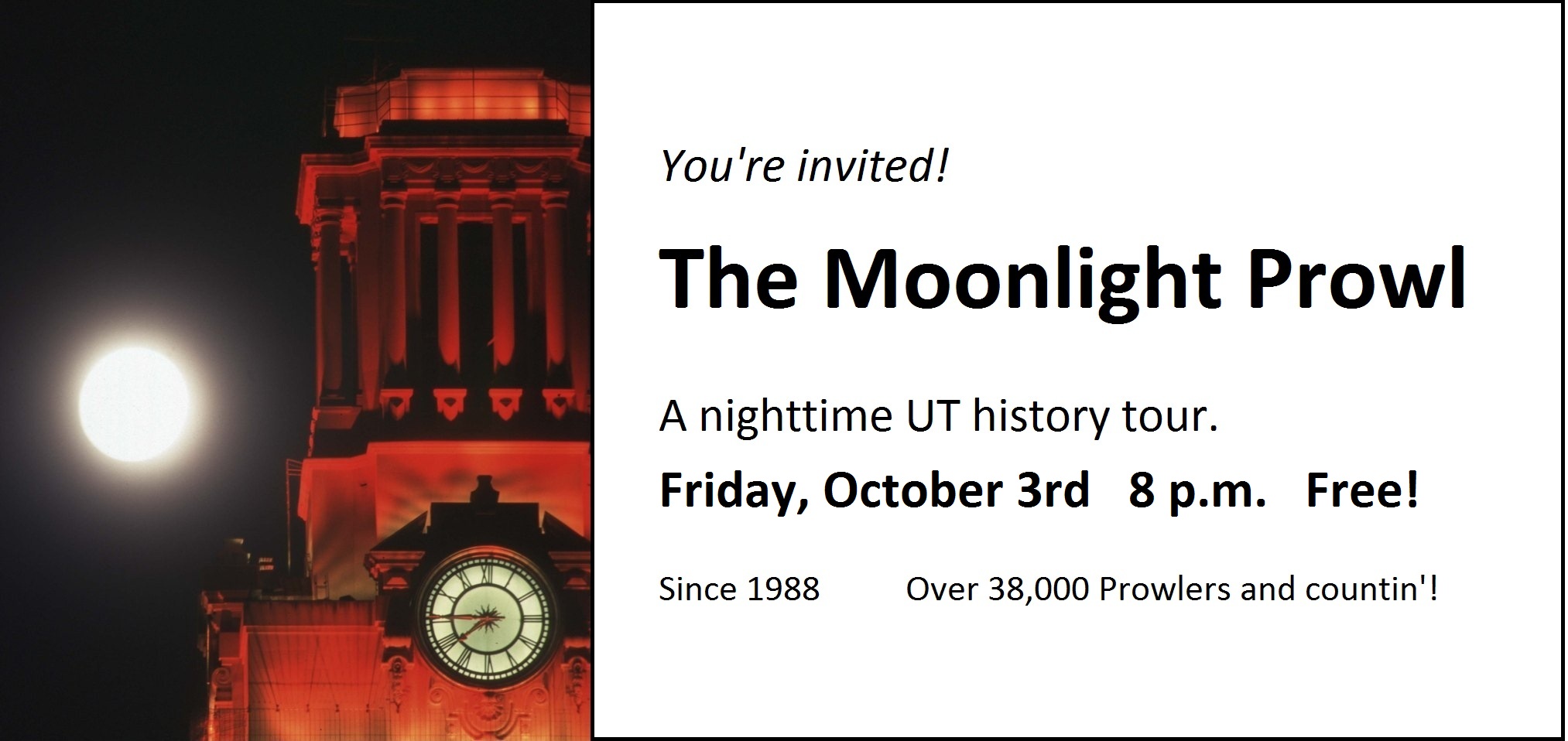
The next Moonlight Prowl is scheduled for Friday, October 3rd at 8 p.m., and it looks like the weather will be clear and cool!

The Moonlight Prowl is a nighttime campus tour packed with anecdotes of student life, campus architecture, and UT history. With content drawn from newspaper accounts and the University Archives, the Prowl is intended to help personalize the University, explore its history, and have some fun.

You’ll find more info about the Prowl here.

~~~~~~~~~~~~~~~~

Architecture Tour.Image

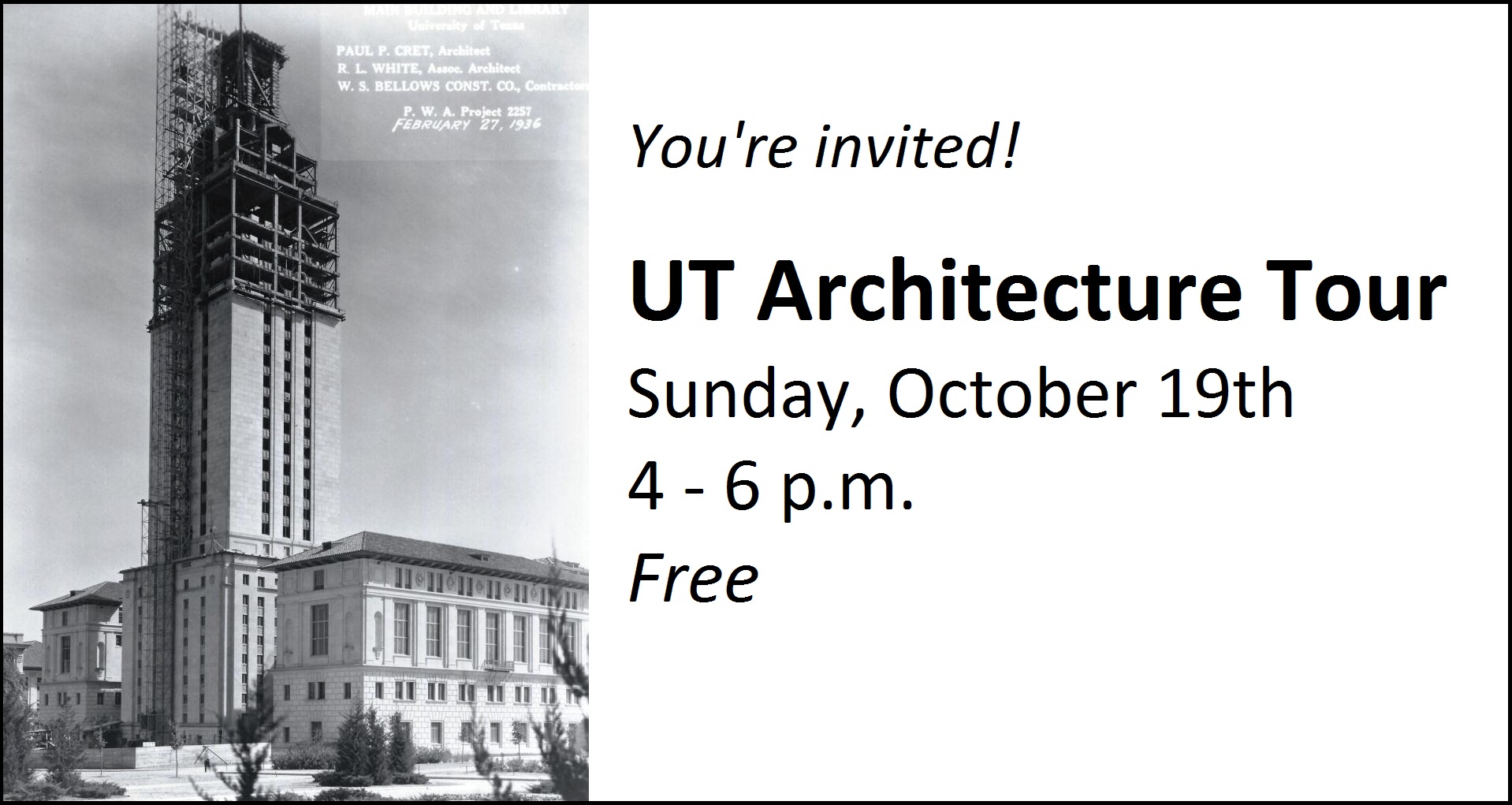
The UT Architecture Tour is an exploration of the architectural history of the University of Texas, from the first “Old Main” building set upon an almost barren forty-acre campus to Paul Cret’s grand master plan and iconic UT Tower. Along the way, we’ll investigate:

  • The UT campus of long ago.
  • Proposed campus master plans and what became of them.
  • The unique designs and uses of some of UT’s most prominent buildings.
  • Symbolism and meaning of campus landmarks and building decoration.
  • Landscaping on the Forty Acres.

Additional information about the tour is here.

How UT Students – and Eleanor Roosevelt – Integrated the Drag

In 1960, University students invented a form of protest that went national.

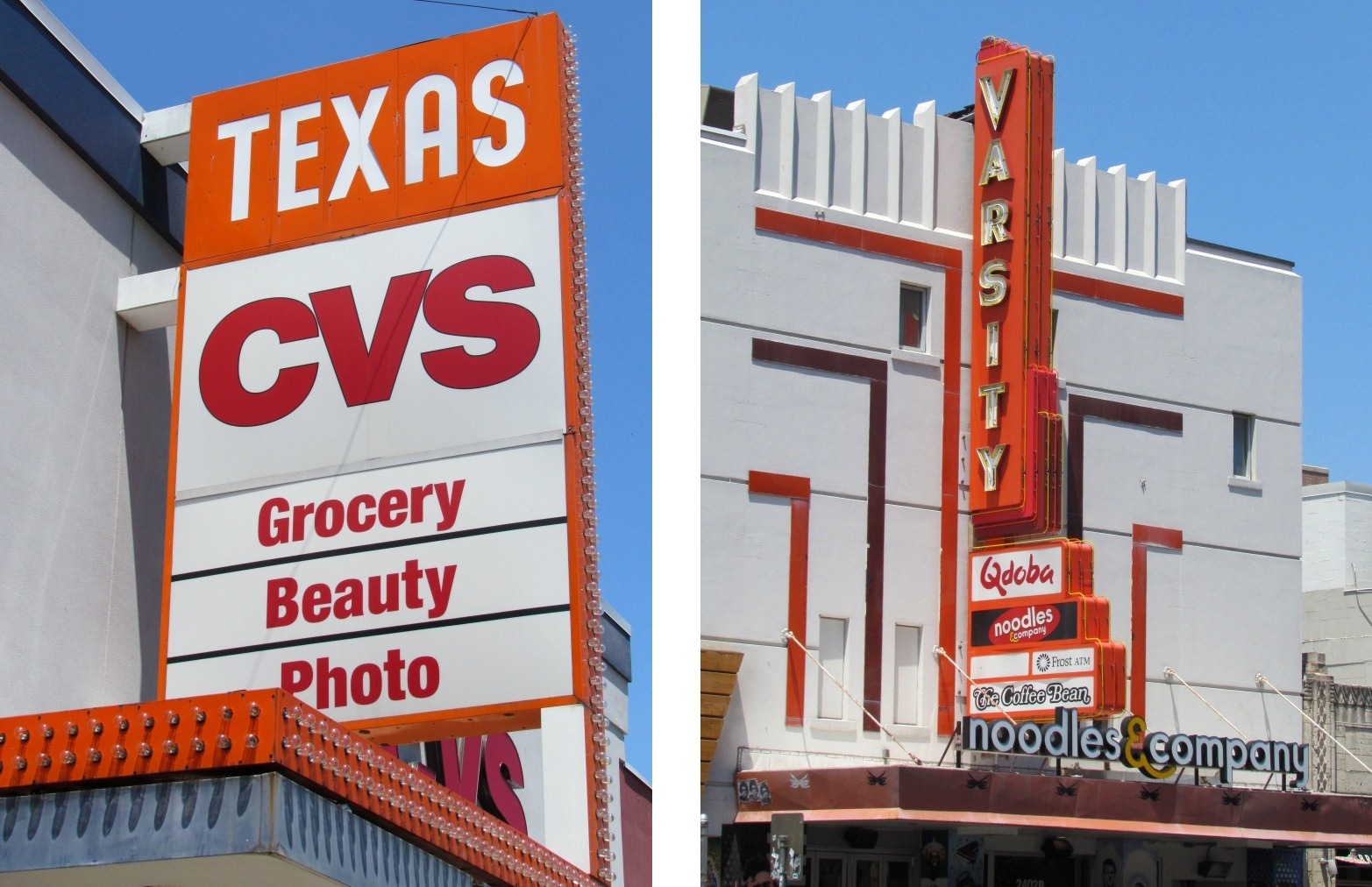
Texas and Varsity Marquees

Above: The marquees of the Texas and Varsity Theaters on Guadalupe Street.

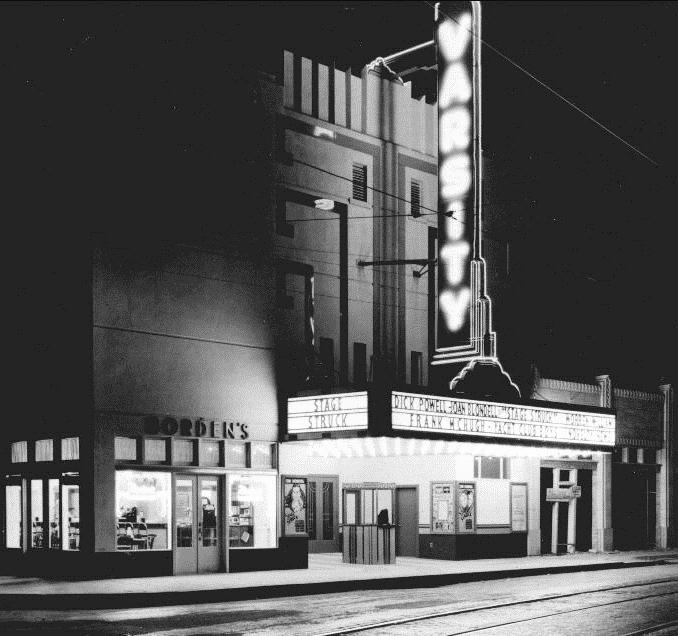
The next time you’re on the “Drag” – that bustling segment of Guadalupe Street which defines the western edge of the campus – take a close look at the stores. Among the book dealers, coffee shops, fast food venues, and clothing outlets, two have squared, projecting covers over their entrances, framed by rows of lights and topped with curious bright orange signs. One reads “Texas,” the other, “Varsity.” What are they?  They’re replicated movie theater marquee signs, though smaller and much less glamorous than the originals. Today, they’re more like historical markers, reminders of a previous era when going to see a motion picture was one of the Drag’s popular charms. The Texas Theater, now converted into a drug store and a coffee shop, opened in the 1920s and initially showed silent films. Two blocks north was the Varsity Theater, with its distinctive Art Deco façade. Built in 1937, it kept up a brisk business until it was reluctantly closed in 1990.

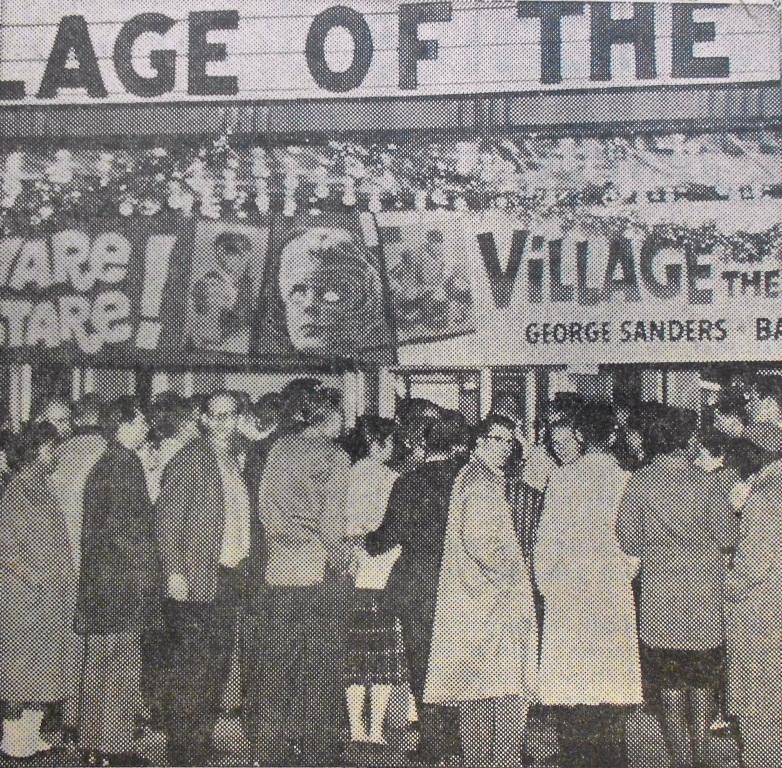
Varsity Theater.NightFor decades, the Texas and Varsity theaters were familiar local landmarks. But in 1960, as the Civil Rights Movement began to bloom in Austin, the two movie houses, which had always been limited to white patrons only, were shoved into the national spotlight as part of a growing campaign for racial integration. The effort to open the theaters to everyone roused a significant portion of the University community, caused UT students to invent a new form of protest that was soon emulated nationwide, and received a little help from a former American First Lady.

~~~~~~~~~~

Integration Cartoon.6“If you were one of the 200-plus Negro students at the University,” wrote Pat Rusch in a 1960 edition of The Daily Texan, “you would be living in the world of the 24-hour inferiority complex.” A decade before, the U. S. Supreme Court decision on the Sweatt v. Painter case required UT’s law school to admit African American Heamann Sweatt. Since then, the University had proceeded gradually to racially integrate the entire student enrollment. By the fall term of 1956, admissions policies had been revised to accept both graduate and undergraduate black students, but other restrictions stubbornly remained. (Above: editorial cartoon from The Daily Texan.)

“You name it, we can’t do it,” explained Huey McNealey, a UT student from Houston. “No matter how you try, going to pep rallies and things, you can’t get any real school spirit, especially when you think about everything that is denied you.” Though classrooms were integrated, the limited on-campus housing was not, and black students were prohibited from participating in many student activities, including athletics and theater productions. While attitudes were changing, the mood on campus wasn’t entirely welcoming. Sophomore Joan McAfee described her first – and last – Longhorn football game: “I was assigned a seat next to a white woman and her son, and every time I got up to yell for the team, she yanked her son close to her so I wouldn’t happen to touch him.”

Off limits, too, were most of the shops along Guadalupe Street. Cafes and nightclubs served white patrons only, along with barber shops, which required African American students to go to East Austin for haircuts. Clothing stores were open, but the use of fitting rooms was prohibited. Movie theaters were also “whites only.” This created a significant problem for black students in courses where professors required the viewing of a specific film as a class assignment.

~~~~~~~~~~

“Integration is practically at a standstill in the University area,” declared UT student Chandler Davidson in November 1960, as he announced the formation of the Students for Direct Action, or SDA. Davidson, who was white, explained that the group’s purpose would be to publicize the difficulties encountered by black students and to “take peaceful, lawful, but definite action to remedy the situation.” The group had initially been formed as the Human Relations Council, under the auspices of student government, but Davidson and others thought the University’s regulations that oversaw student activities would eventually thwart their efforts.

Instead, the SDA wasn’t officially connected to the University. It met just off-campus in the YMCA building, then at the corner of 22nd and Guadalupe Streets. Davidson hoped the group would “get around the formidable red tape which has hamstrung ‘official’ groups in the past.”

As the SDA began to meet, the integration of stores along the Drag quickly became a top priority. Efforts had already been made to open cafes to African Americans, but with little success, so the group turned its attention to the theaters.

Earlier that year, on February 1, 1960, four black students from the North Carolina Agriculture and Technical College in Greensboro entered a local Woolworth’s Department Store, and, after making a few purchases, sat down at the lunch counter which was labeled “whites only.” They were refused service, but remained in their seats for an hour in protest. The “sit-in” was born, and soon became popular as the Civil Rights Movement matured through the South. The first sit-ins in Texas occurred just a month later.

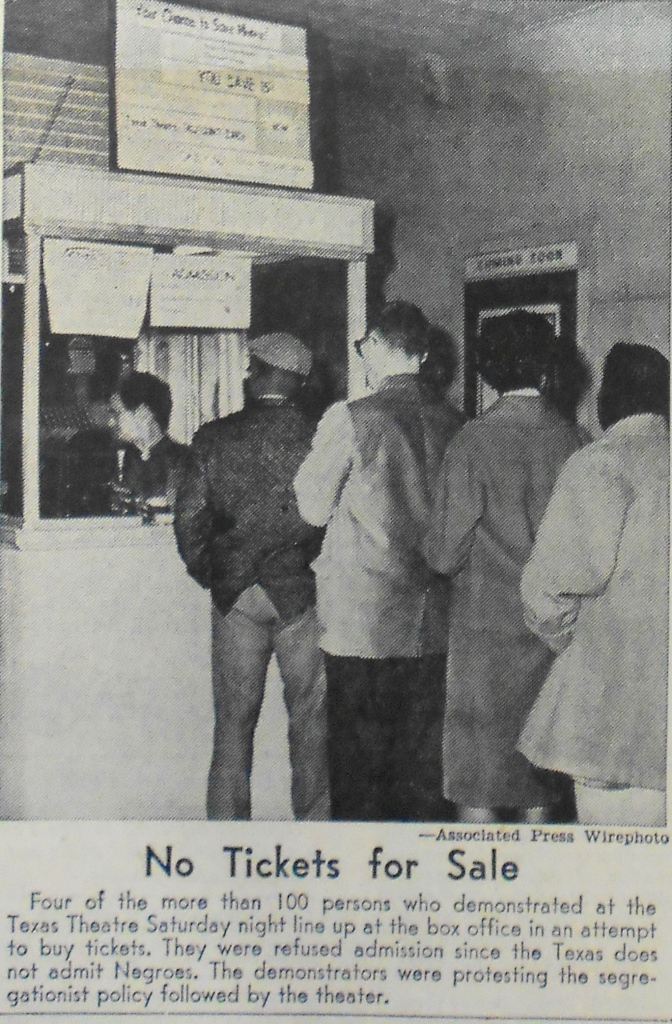
??????????As SDA members discussed plans to persuade theaters along the Drag to integrate, African American student Houston Wade made a suggestion. A variation on the sit-in, Wade called it a “stand-in.” Persons would line up at the box office, and when their turn came to purchase a ticket, would politely ask, “Is this theater open to all Americans?” When told it was limited to white customers only, the person would return to the end of the line and repeat the process. This had the effect of both raising the issue and clogging up the line.

The first stand-in was slated for Friday, December 2nd at just after 7:30 p.m. About 100 students, a biracial group with 20 African Americans, stood in line at the Texas Theater, which was next door to the YMCA. The line snaked down the sidewalk as the protest lasted an hour before the group returned to the Y.

The stand-in was deemed a success, and more were quickly scheduled. As the group grew to over 150, half stayed at the Texas Theater, while the remainder went to the Varsity. Mrs. Ludwema Wercham, the ticket seller at the Texas Theater who had to endlessly respond to same question, was presented a an orchid with a note signed, “With kindest regards for your long suffering patience.”

~~~~~~~~~~

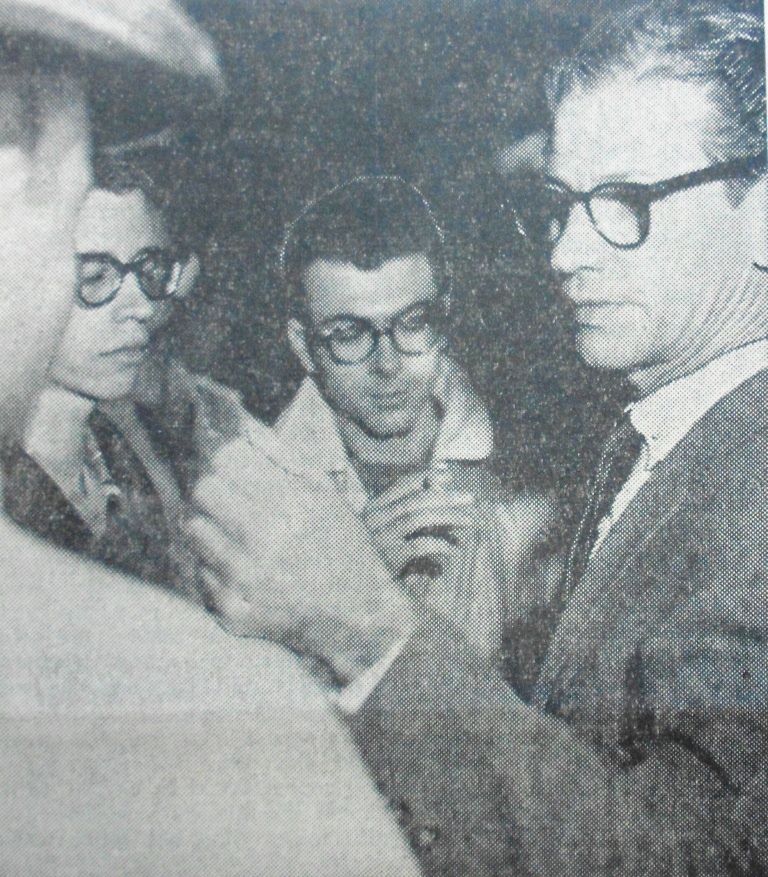
Dec 10 1960.Varsity Theater.Charles Root.ManagerWhen the stand-ins began, managers of the two theaters found themselves in an awkward situation and reacted differently. Both movie houses were owned by parent corporations: the Texas Theater was part of the Trans-Texas Theater chain, headquartered in Austin, while the Varsity was owned by ABC-Paramount in New York City. Despite endless questions and requests from the protesters, neither manager could alter the admissions policy at his discretion, but was bound to uphold the parent company’s directive.

The manager of the Texas Theater opened a second ticket office inside the lobby – while keeping the outdoor one open to “keep as near normal an operation as possible” – and tried to direct those who truly planned to see a film indoors. He instructed the protesters to remain on the sidewalk and not enter the building, and threatened to call police if the demonstrators became unruly.

But the Varsity Theater manager confronted the protesters. Most of the front entrance was roped off, while an employee used a bullhorn to instruct theater-goers to step past the demonstrators. The manager held a clipboard and demanded the names, addresses, and home towns of those involved in the stand-in. “I’ve been answering your questions,” he stated, “now it’s time for you to answer mine. I want to know who I am talking to.” Another employee was ready with a camera to take head shots. It was all a scare tactic, of course, and meant to intimidate. Instead, many of the demonstrators readily posed for photographs.

Above: The manager of the Varsity Theater tells students, “I’m not going to debate you.”

~~~~~~~~~~

The stand-ins garnered a mixed reaction from the Drag’s merchants. All had grown up with segregation. As would be expected, some were uncomfortable with the notion of change; others were simply opposed to it. Just as important, though, were the merchants’ fears that integration might hurt their businesses. If stores were opened to everyone, white patrons might decide to shop elsewhere. “I was the first to serve Negroes on the Drag … about three years ago,” one restaurant owner explained in the Texan, “and I got a violent reaction. A majority of my customers didn’t want it – they wrote letters, and protested in person – so I changed back.” A store manager said of the student demonstrators: “They haven’t grown up. None of them have had to make a living for themselves. I thought the University gave them enough homework that they wouldn’t have time to tell a private businessman how to run his business.”

~~~~~~~~~~

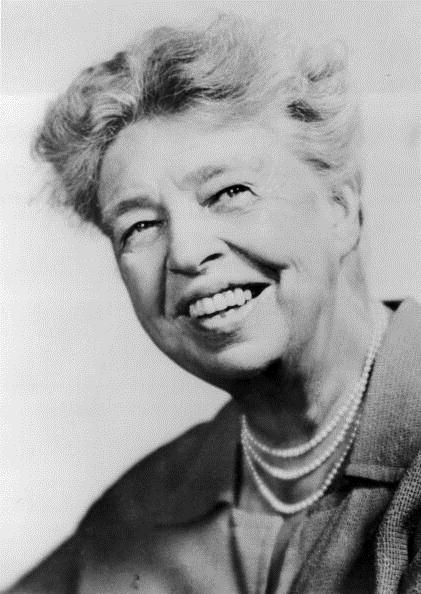
????????????????????????????????????????????????????????????????????????????????????????????????????????????????????????????????????????????On Friday, December 23rd, as the University was closing for the holiday break, the stand-ins received an unexpected endorsement. Former First Lady Eleanor Roosevelt, who, at 76, was still publishing her “My Day” column in newspapers nationwide, wrote of the goings on in Austin. “Students of the University of Texas … have set themselves the task of picketing the Austin theaters … I am personally grateful to the Texas students for making the effort to bring about the end of this kind of segregation.” Roosevelt’s column helped to transform the SDA’s cause from a local issue into a national one, and gave it a wider audience. (The full text of Mrs. Roosevelt’s column can be found here.)

~~~~~~~~~~

Texas Theater.Integration Picketers.As classes resumed in January 1961, so did the protests. For the next five months, the SDA organized two or three stand-ins a week with 100 – 150 participants. Picketers were added and carried signs which read, “Your money spent here supports segregation.” When the weather was chilly, coffee and donuts were available at the YMCA next door to the Texas Theater or at the University Methodist Church across the street from the Varsity. After a while, the protests developed into social gatherings. Songs were sung, student couples made it a cheap date, and occasionally a professor or two was spotted joining the lines.

At the same time, an upwelling of support from the University community appeared on the editorial pages of The Daily Texan. “Racial segregation is a drag on social progress,” one student commented. “What could be more absurd than a student showing a willingness to sit next to a Negro in a classroom, but refusing to sit next to him in a restaurant or theater?” Academic departments voiced group opinions. A dozen faculty and staff from the Department of Classical Languages declared segregation a “fundamental violation of human dignity.” A few days later, a letter signed by 66 members of the English department, including folklorist and department chair Mody Boatright, endorsed “the statement of our colleagues” from the classics department. “When we recommend a film or play by Shakespeare or Shaw … we want to be sure that such important experiences are open to all students.” Additional departments from across campus joined the chorus, along with informal groups of professors. “The undersigned faculty” stated one note, endorsed, with others, by government professor (and future graduate school dean and acting UT president) Bill Livingston, “wish to express their agreement with the objectives of students now seeking to integrate theaters on the Drag, and believe the peaceful, non-violent methods they are using are fully compatible with the accepted procedures of democracy.”

~~~~~~~~~~

??????????To maintain interest and momentum in the cause, the SDA symbolically chose Sunday, February 12th – Abraham Lincoln’s birthday – for its most ambitious demonstration to date. Not only would the local stand-ins be larger, but SDA members had networked with like-minded college students in other parts of the country and asked for sympathy protests. The results were better than expected. On the appointed day, more than 400 persons crowded the sidewalk along Guadalupe Street, including a few students from Saint Edward’s, Concordia, and Huston-Tilitson Universities. Sympathy protests were held at the Universities of Michigan and Illinois, Oberlin College in Ohio, and at Harvard. But just as newsworthy, Houston Wade’s initial idea of the stand-in was being emulated nationwide. Corresponding stand-ins were held in San Antonio, Houston, Dallas, Shreveport, Boston, New York, Chicago, and San Francisco.

~~~~~~~~~~

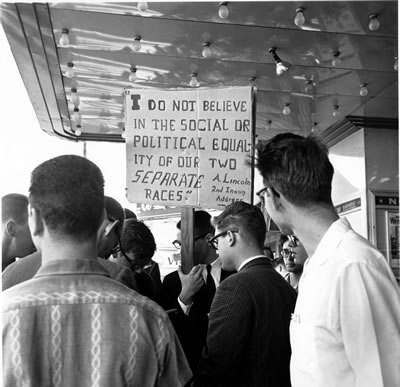
Pro Segregation Picket.Varsity Theater.Feb 12 1961Though efforts to integrate the theaters were, for the most part, non-violent, there was opposition. A student group that called itself the Foundation for the Advancement for Conservative Thought (FACT) distributed newsletters which argued a businessman should have the right to “make his own decisions in such matters as whom to serve” and not be “forced” to integrate. At the stand-in on Lincoln’s birthday, a small group of segregationists held signs which read, “I do not believe in the social or political equality of our two separate races,” and claimed – incorrectly – that the sentence was from Lincoln’s 1865 inauguration speech. (Instead, it paraphrased some of Lincoln’s statements from the 1850s.) On occasion, riders in cars along Guadalupe Street derided the protesters, and there was a single incident where two youths were arrested for spitting, pushing, and assaulting picketers.

On campus, at least one professor warned his graduate students against participation in the stand-ins, as it might harm their future careers. Rumors persisted that the University administration was pressuring The Daily Texan to cease coverage of the protests, and the YMCA reviewed a request to make its facilities available only to University-approved student organizations. As the SDA wasn’t officially connected to UT, it would have been left homeless. The YMCA politely declined.

~~~~~~~~~~

Through the rest of the spring, while long lines and picketers had become a routine sight on the Drag, the effort continued to receive broad attention. Photos of the stand-ins regularly appeared in the Austin newspapers, TIME magazine and The New Republic printed articles, and venerated television and radio journalist Edward P. Morgan delivered a sympathetic commentary to his listeners nationwide.

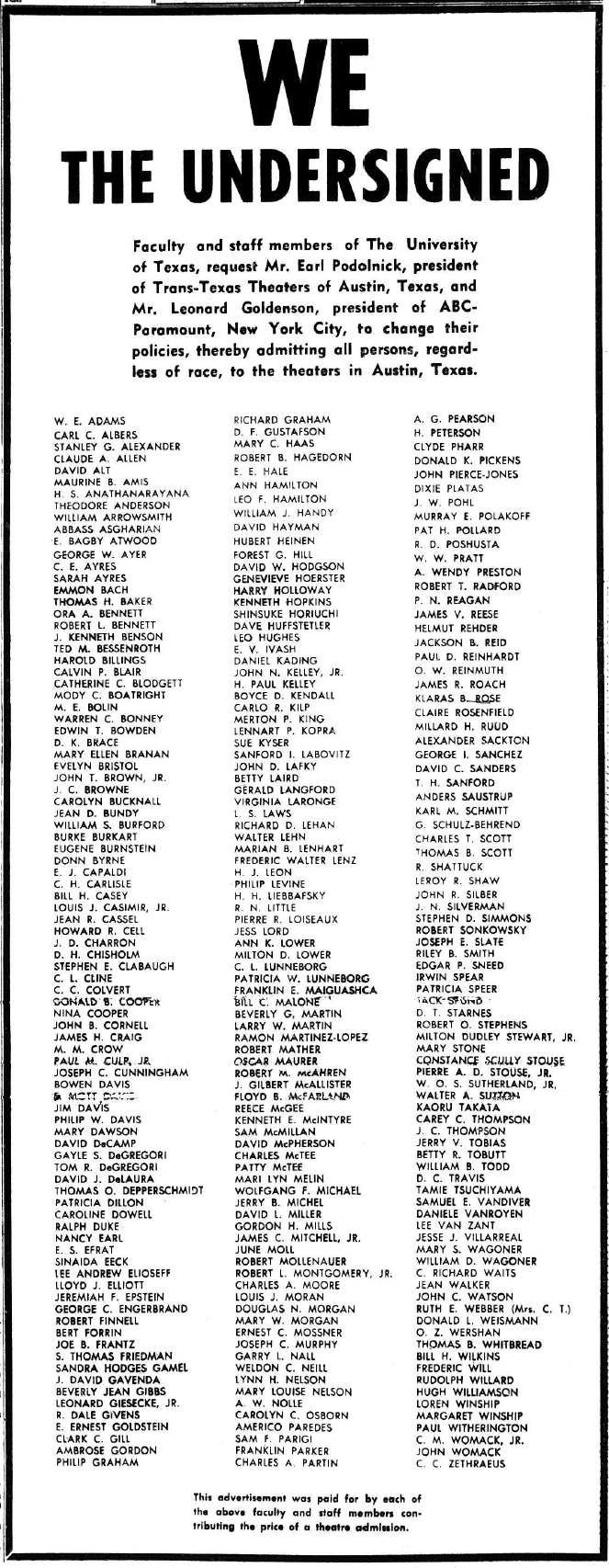
Austin American.May 17 1961.On May 17th, 260 members of the University faculty and staff published a four-column advertisement in the Austin American, each person having contributed the price of a movie ticket. (Photo at left. Click on the image for a larger view.) The ad specifically requested the presidents of the two companies that owned the Texas and Varsity Theaters to revise their policies and open the theaters to everyone.

At the end of the spring term, when most UT students had left Austin for the summer break, a hiatus was declared for the stand-ins, though the SDA vowed their return in the fall. But as the integration of public schools, restaurants, playhouses, concert halls, and other venues were then making headlines nationwide, executives from Trans-Texas Theaters and ABC-Paramount sought a permanent solution.

A meeting was called for August 4th. Representatives from the theaters, Houston Wade from the SDA, English teaching assistant Claude Allen on behalf of the UT faculty, and Rabbi Charles Mintz of the Austin Human Relations Commission met for negotiations. If the stand-ins ceased, the theaters agreed to a one-month trial period in September where African American UT students (who would be required to show IDs) would be allowed into the theaters. After a month, if there had been no objections from other patrons and business was unaffected, the theaters would quietly open their doors to all persons.

The month-long experiment was, of course, a success. Within a year, most of the shops along the Drag had integrated as well.


Funeral for an Outhouse

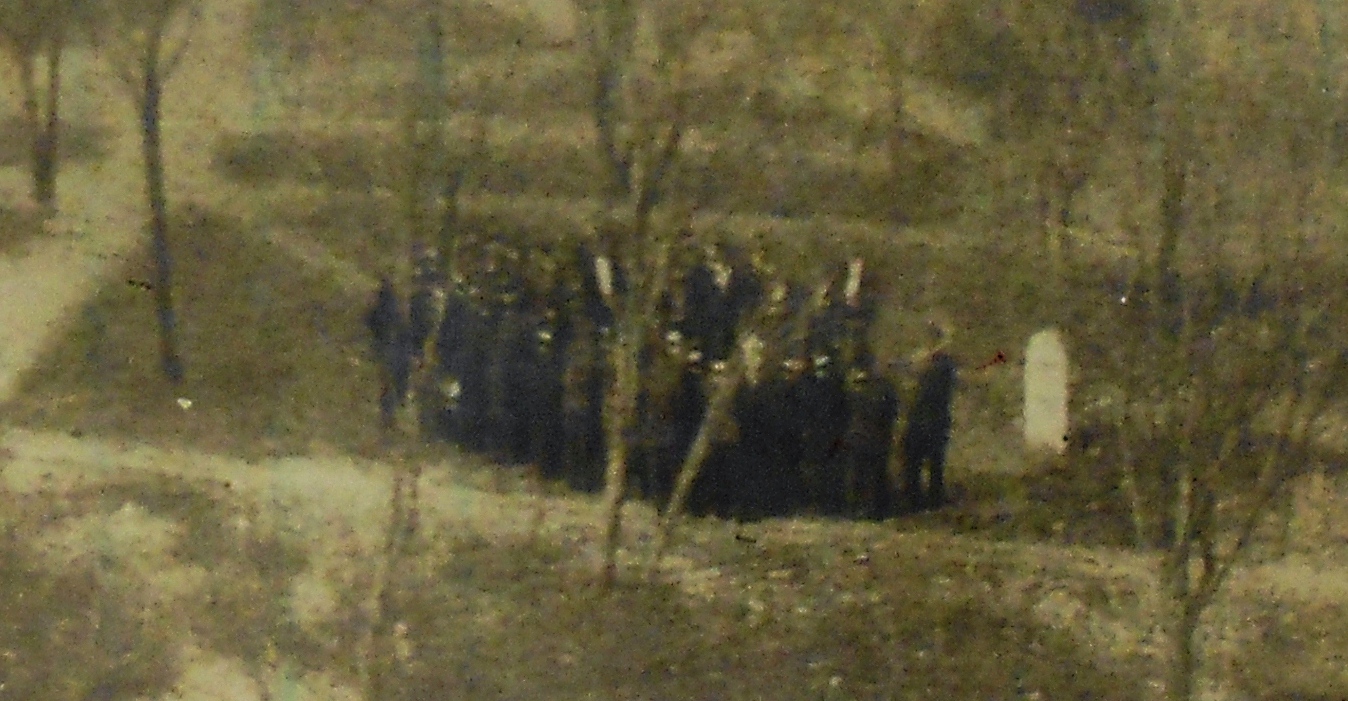
George Town Funeral.1905Above: Students hold a funeral service for the beloved “George Town.” Buildings from left: north wing of Old Main, Chemistry Lab Building (burned in the 1920s, where the biology ponds are today), smoke stack of the first power house, Littlefield Home in the distance, and the newly finished Engineering Building (now the Gebauer Building). Click on the image for a larger view.

At first glance, the image is a somber scene. It’s grainy and poorly focused. A lack of shadows suggests it was a gloomy, overcast day, and the mostly barren trees imply the photograph was taken in winter or early spring. At the center, a group of about twenty-five men, dressed in dark suits and hats, have solemnly gathered in front of what looks like a gravestone. But don’t be fooled, as this was no ordinary memorial service. The hurried photographer captured one of those rare student shenanigans: a funeral for an outhouse.

In April, 1900, when severe storms and flood waters destroyed the original Austin Dam (since replaced by the Tom Miller Dam), the city’s water supply and, in turn, the sewer system, were unreliable for several years. Of course, this affected everyone on campus, especially the occupants of B. Hall, the University’s first residence hall for men. As a proactive measure, temporary restroom facilities were built just west of the dorm.

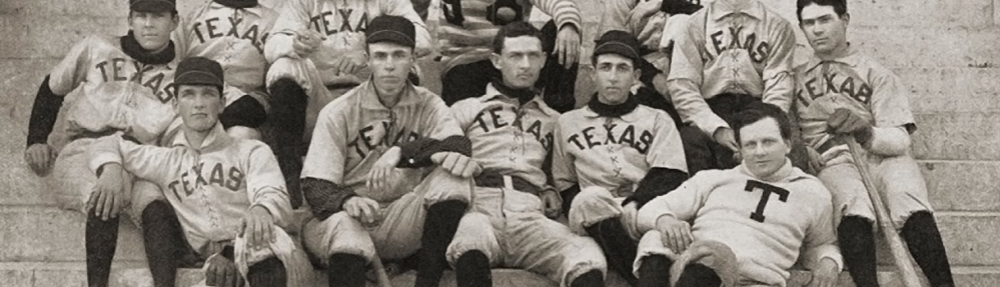
Made of brick with a simple wooden roof, most agreed the outhouse was an eyesore, though according to UT student Victor “Dutch” Lieb, “It was sort of an institution.” The building was dubbed “Georgetown,” not as a slight to the city thirty miles north of Austin, but to poke fun at Southwestern University. In 1885, UT played its first ever baseball game in Georgetown against Southwestern. The game didn’t go well for UT, though it brought about the first appearance of orange and white as the University’s colors. Since then, UT and Southwestern had maintained a spirited baseball rivalry. (Given the feelings most Longhorns have about the University of Oklahoma, a similar temporary facility on campus today might lovingly be called “Norman.”)

By 1904, University officials thought the outhouse was no longer needed, and over the week-long break for Christmas holidays, a few students who’d remained in Austin were recruited to raze the structure with the help of a telephone pole battering ram. When B. Hall residents returned after the New Year, they discovered their institution gone, but not forgotten.

George Town.Epitaph.1.Shortly after spring classes were underway, Lieb and fellow engineering student Alf Toombs decided to honor the privy’s passing with a formal ceremony. “It took about ten seconds in those days to organize a funeral cortege,” Toombs later recalled. “Dutch was the sky-pilot and I was the choir leader.” Lieb fashioned a large wooden marker with the painted epitaph: “Sacred to the memory of George Town. He is not drunk, but slippeth.” Meanwhile, Toombs recruited the funeral party. When all was ready, the group formed two columns, then marched out from the newly finished Engineering Building (today’s Gebauer Building) while singing the well-known and venerable hymn, “Nero, My Dog, Has Fleas.”

Once assembled in front of the marker, “Reverend Dutch” uttered a short prayer, led another song, then turned the program over to Toombs, who eloquently expounded upon the virtues of the late Mr. Town and his unselfish devotion to mankind. Toombs described at length how “George” had been “a sheltering friend to many in need, at times of their most poignant distress.” Apparently the eulogy brought tears to the eyes of many of the listeners.

Early spring flowers, swiped from groundskeeper Harry Beck’s campus gardens, were laid on the ground in front of the marker. The ceremony concluded, Toombs remembered, “We left the hallowed spot with the consciousness that another worthy deed had been done where so many had been done before.” The group made their way to Weilbacher’s Confectionary and Soda Fountain downtown to drink a toast to the dearly departed.

George Town Funeral.1905.Close up.

Above: Victor Lieb and Alf Toombs lead a memorial service for the late “George Town.”

How to Save Baseball

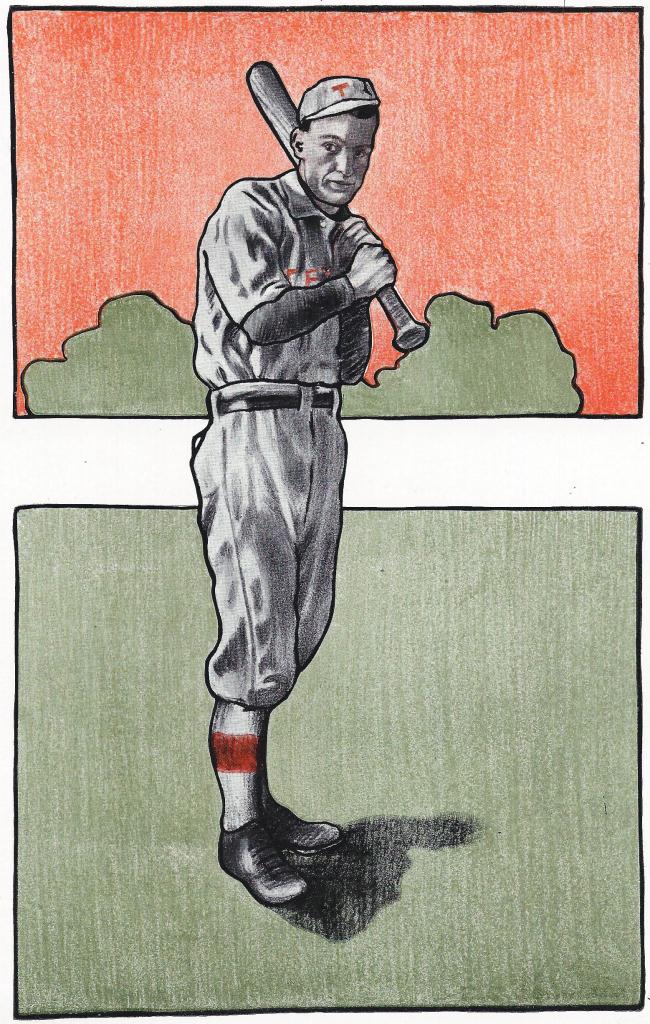
1906 Cactus.BaseballIt’s mid-June, and Longhorn baseball fans are jubilant over the team’s record 36th appearance in the College World Series. They have good reasons to be happy. Over the last 108 seasons, the team has had but five coaches: Billy Disch, Bibb Falk, Cliff Gustafson, Augie Garrido, and second-year coach David Pierce (Blair Cherry stepped in for Bibb Falk for part of World War II and coached the team from 1943 – 1945), who have collectively compiled six national championships and more than 70 conference titles, a unique and remarkable achievement in college baseball.

For the veteran fans who fill the stadium seats each spring, the team’s history, coaches, and names of players who went on to the major leagues are all familiar. But almost no one remembers the senior UT student whose quick – and perhaps desperate – actions saved the baseball program from being cancelled outright. The achievements of UT baseball might never have happened, or at least would have been delayed, if it hadn’t been for Maurice Wolf.

1906 Cactus.1905 Baseball Team

In early January, 1906, the prospects of a baseball season were dim. The University’s Athletic Council, chaired by math professor (and future UT president) Harry Benedict, had officially adopted a policy of “no cash, no schedule.” While football had been marginally profitable, other sports were usually in the red, and baseball was the worst offender. A $1200 deficit plagued the ledger. In the past, faculty and alumni members of the council often donated out of their own pockets to keep the athletic ship afloat, but Benedict was determined not to let serving on the council “run the risk of personal ruin.” The deficit had to be erased before Sewell Myer, the student manager of the baseball team, was allowed to set-up a schedule.

Baseball wasn’t all that popular with the general faculty, either. Too many players had run afoul of academic eligibility rules. Only a few years before, on an out-of-state road trip, an ineligible player boarded the train and suited up for play with his costs covered by his teammates, despite being expressly prohibited from doing so by the University president. If the $1200 could not be raised or guaranteed, both the Athletic Council and the faculty were ready to discontinue baseball.

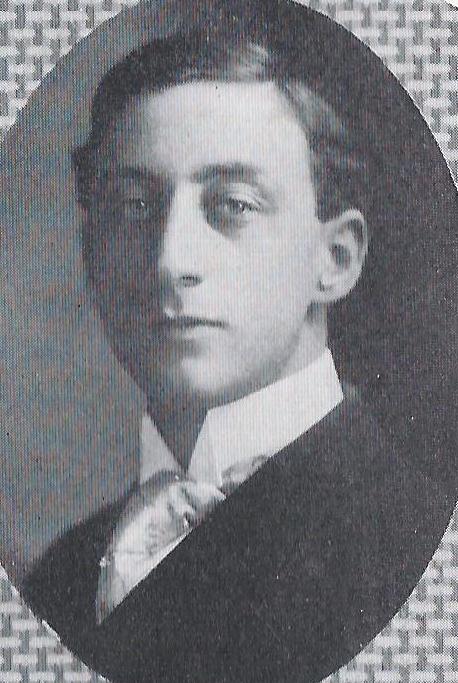
1906 Cactus.Maurice WolfThe students didn’t want to lose the team, and searched for for a quick solution. After some delicate diplomacy and uneasy agreements, $900 was promised from library deposits. The final $300 was pledged by 30 students who signed an agreement to pay $10 each by May 1st if needed. Among them was Maurice Wolf (pictured), who was told that the bond was simply a formality, the team finances would be fine, and the money wouldn’t actually have to be paid.

The Athletic Council accepted the solution, and Sewell Myer set out to arrange a schedule, but because of the late start, there were fewer opponents available. The team managed an eight-game, out-of-town trip to Texas A&M, Louisiana State, and the University of Mississippi, and the UT hosted Kansas, Baylor, Saint Edward’s, Southwestern, and the Austin League Team. But as with previous years, some of the best players collided with faculty regulations and had to be benched. Rain cancelled one of the games against Kansas and another with Baylor, which hurt the all-important gate receipts. Texas swept a home series with Texas A&M to finish with a 10-9 record and claim a winning season, but it also ended with a $500 deficit. The $10 pledges due on May 1st would have to be filled.

As might be expected, the students weren’t prepared to pay. At the time, $10 was a sizable sum. It would more than cover a month’s rent and meals at B. Hall, the men’s dorm on the campus. If Maurice and the others were unable to find the money, not only would their reputations suffer, but an exasperated faculty was more than ready to shelve baseball.

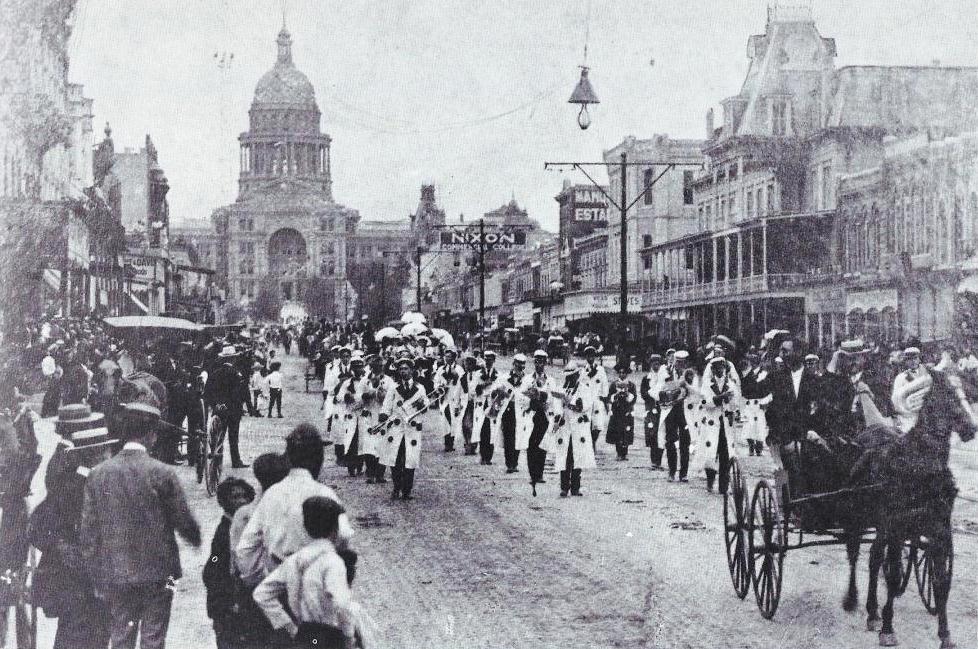
To rescue the program, Maurice convinced his fellow students to host an ambitious fundraiser in the form of a circus performance. Dubbed the “Varsity Circus,” the entire campus helped with organization and preparations, and within a few weeks all was ready. Late on the warm afternoon of Friday, May 25, a circus parade proceeded down Congress Avenue, much to the delight of thousands of spectators. The participants included the University Band, posing as a “celebrated musical company from Italy,” automobiles decked out in University colors with campus coeds as “Duchesses of Marseilles,” a troupe of clowns, acrobats, wild elephants, camels, lions, and bears (UT students in homemade costumes), “Ben Hur and Ben Hill” riding Roman chariots, and other eclectic acts.

1906 Varsity Carnival Parade

Above: The Varsity Circus parade strolled down Congress Avenue. The University Band, dressed in white jackets and colorful buttons, posed as a musical group from Italy. Behind them, UT co-eds, dressed as “Duchesses from Marseilles” and carrying parasols, rode in a decorated automobile. Ahead of the band in the horse-drawn cart rode Maurice Wolf, who concocted the idea as an athletics fundraiser. Click on the image for a larger view.

With the parade finished, the public made its way to the campus and Clark Field, the University’s first athletic field, where the O’Donnell Building and the Gates-Dell Computer Science Complex stand today. There they found a “promenade of curiosities,” where for one thin dime a person might get a glimpse at the bearded lady, the human frog, “Ana Conda Baby,” the wild man (who some discovered was actually baseball umpire Speilberger in disguise), a living mummy from Egypt, and other wonders. Refreshments could also be had at modest prices.

The circus proper began at 8 p.m., as more than 1,200 onlookers stood, sat on the ground, or packed the single, inadequate set of stands. The acrobats were in top form, the wild animals knew their routines, the chariot races across the field were exciting, and the clowns kept everyone in stitches. After the acts, the University Band and Glee Club gave a performance, and everyone reluctantly left for home sometime around midnight.

The hero of the day was Maurice Wolf, who had devised, engineered, and produced the spectacle, and the results were gratifying. The Varsity Circus raised enough funds to retire the athletic debt, provide a $150 contribution to the band, and another $100 to the glee club. The University of Texas baseball team would continue for another year, and the Varsity Circus became a biennial tradition well into the 1920s.

The University Learns of D-Day

D Day Extra.Austin.June 1944 In the early morning hours of Tuesday, June 6, 1944, Austin was literally under a dark cloud. A late night thunderstorm had cooled the first 90-degree day of the year, and doused the city with some welcome rain. On the University of Texas campus, many students were still awake. It was the dreaded last week of class for the spring quarter, always full of tests and term papers. And as final exams loomed on the horizon, everyone was looking forward to a break over the weekend, when Tommy Dorsey and his famous orchestra would be the headline act for the All-University Dance at Gregory Gym Friday evening.

To stay alert through long hours of study, most students relied on a steady diet of coffee and big band dance music on the radio. But on this night, the lightning interrupted reception, and the radios sputtered and crackled with storm static.

At 2:30 a.m., about the time when most stations and their sleepy announcers prepared to sign off, a gentleman from New York abruptly interrupted the programming: “We take you now to London.”

Soon after, the steady voice of Colonel Ernest DuPree, from the Supreme Headquarters of the Allied Expeditionary Force (SHAEF), calmly read official communiqué number one. “Under the command of General Eisenhower, Allied naval forces, supported by strong air forces, began landing Allied armies this morning on the northern coast of France.”

Finally, after months of waiting, speculation, and false alarms, D-Day had arrived.

~~~~~~~~~

UT World War II ROTCSince December 1941, when the United States entered the second world war, the University of Texas campus had been transformed to support the war effort. The academic calendar was compressed to permit additional terms – some as short as three weeks – to allow students to complete more courses sooner and graduate in 3 ½ years. Research, especially in natural sciences and engineering, was mostly war-related and classified. A Naval ROTC unit was created, but was absorbed into the V-12 program in 1943, which was designed to recruit and prepare officers for the Navy, Marines, and Coast Guard. It was headquartered at the Littlefield Home, which for a time boasted two anti-aircraft guns on the front lawn and a firing range in the attic. All UT students were required to attend physical education classes and survival training. Theater students and the University’s Curtain Club entertained soldiers at area military bases and hospitals, and the Texas Union even set up a regulated dating service, matching UT co-ed volunteers with locally-stationed GIs. An air raid siren was installed in the UT Tower, and at times, everyone had to seal their windows at night and tape over headlights when Austin was under a blackout.

Social life continued on the campus, but took on a wartime theme. The weekly All-University Dances, either at the Texas Union ballroom or Gregory Gym,  were very popular, though the dances were always accompanied by collection drives. Collections for aluminum, rubber, and books and magazines to send to soldiers oversees were the most successful. As the war continued, gas rationing required some of the popular dance bands to shorten their tours (Tommy Dorsey arrived in Austin by train), and required UT students to rely on local talent or supply their own.

One solution was the “Longhorn Room,” which debuted in the Union ballroom on Saturday, November 14, 1942 to a sold out crowd. Decked out with wagon wheels, cedar posts, bales of hay, and red-checkered tablecloths, the ballroom was transformed into a student-run, western-styled nightclub. Couples (no stags allowed!) were charged fifty cents, and could reserve tables in advance. Music was supplied by the Union’s record player. Student groups volunteered to set-up and decorate, wait on tables, tend bar, and clean up afterward.

The highlight of the evening was the half-hour variety show, which was often unpredictable. A sorority might perform a short musical, complete with costumes and dancing, or individual students would entertain the crowd with stand-up comedy. Occasionally the Longhorn football team brought down the house with their version of the Can-Can.

~~~~~~~~~

With the announcement that a European invasion was underway, the campus began to stir. Lights were turned on, roommates pushed out of bed, and the news yelled down hallways in campus dorms. Everyone was glued to their radios – television wouldn’t arrive in Austin until 1952 – which offered a constant stream of updates and initial first-hand accounts. Announcers often interrupted bulletins with new bulletins. General Eisenhower himself addressed the citizens of occupied Western Europe, “Although the initial assault may not have been made in your own country, the hour of liberation is approaching.”

At 4:30 a.m., the All-Saints’ Episcopal Church, just north of campus, began to ring its church bells, and awakened all of the residents in the Scottish Rite Dormitory across the street. Other churches did the same, both in Austin and across the country. (In Houston, most retail stores would remain closed for the day as 445 churches opened for 24-hour prayer vigils.) About the same time, west campus fraternity and sorority houses, along with some private residences, received telephone calls from an anonymous, almost-hysterical woman, who shouted, “The invasion is here! The invasion is here!”

Ironically, among the last to receive word was the Naval V-12 unit housed in Andrews Residence Hall. Because they were under a strict schedule with lights (and radios) out at 10 p.m., the members of the naval unit had managed to sleep through most of the night. It wasn’t until “limber-lunged Gordon,” a newsboy for the Austin Statesman, passed by the residence hall. He was selling a tabloid-sized newspaper extra at 5:30 in the morning. “Extra! Extra! Invasion on!” yelled Gordon as he walked the puddled streets. In a few minutes, the lights of Andrews were aglow.

1944.V 12 Units on Main Mall

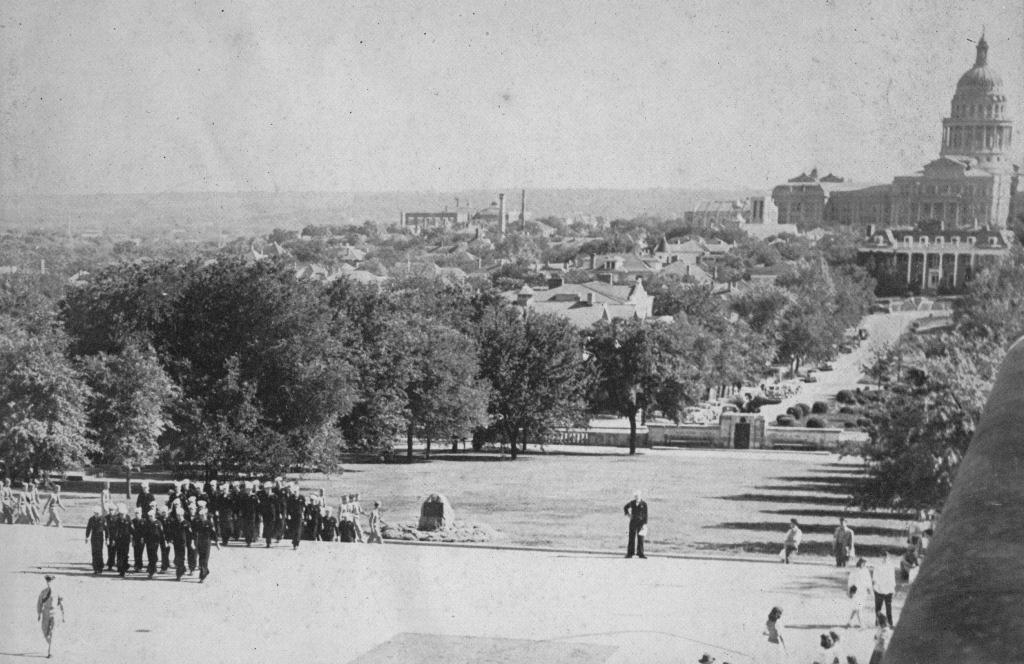
Above: In 1944, with a grand view of the South Mall and Texas Capitol beyond, University students enrolled in the Navy’s V-12 program march in formation on to the Main Mall. Click on the image for a larger view.

The Thrilling Adventures of Alec!

Or, How April 1st became a UT Holiday

The Texan.April 4 1908

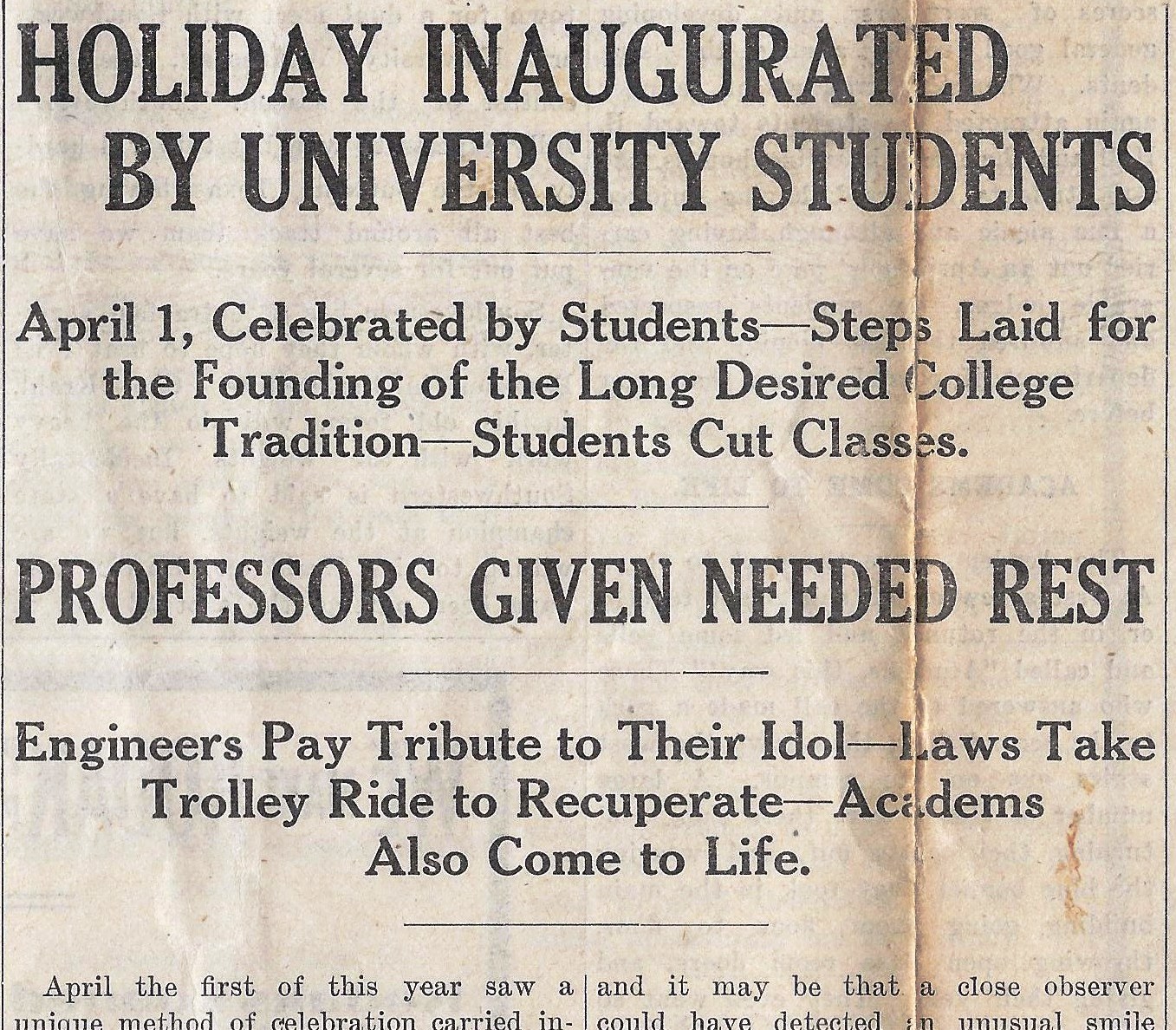
Above: Headlines from The Texan in April 1908. “Holiday Inaugurated” – “Professors Given Needed Rest.” How considerate of UT students to give the faculty a day off!

All hail UT’s patron saints!! Among the schools and colleges on campus, a few have taken on mascots which have affectionately been promoted to patron saints. The law school has its staid Peregrinus, business boasts the wily Hermes, architecture claims the mysterious Ptah. But the best-known is the patron saint of the Texas engineers: Alexander Frederic Claire, or simply, Alec. His arrival created an annual UT holiday.

When the University first opened in 1883, the academic calendar of choice was the quarter system, and holidays were in short supply. The fall term opened in early October, with final exams completed just in time for Christmas. Winter classes resumed the third or fourth day of January and ran through mid-March. And without a pause, the spring term began immediately after winter finals and continued mercilessly until the first week of June. In the spring, students were permitted only two days to catch their breath: March 2nd in honor of Texas Independence Day, and April 21st for San Jacinto Day.

In 1908, the start of spring classes was joined by a student movement for a third spring holiday, preferably April 1st, which was about halfway between the other two. Officially, the faculty opposed the idea, though professors did nothing to prevent the cause from gaining momentum. As the students began to organize, there were indications that if their request was refused, they would simply stage group walkout for the day.

About the same time, UT engineering students received an invitation from their counterparts at the University of Missouri to travel north to the Show Me State for St. Patrick’s Day. Since 1903, Missouri engineers have declared St. Patrick to be one of their own, and have used March 17th to celebrate.

As for the Texas engineers, they’d already claimed a patron saint. Since 1901, Alexander Frederick Claire – or “Alec” – was the main character in Hi Ho Balls, a favorite song of the engineers. But Alec was known in name only. There was neither an appropriate physical rendering, nor a special day, for UT’s patron saint.

Alec.Hi Ho Balls Music. - Processed

The invitation from Missouri, along with the students’ request for a holiday, sparked an idea. If the Missouri engineers take a day off to honor their patron saint, why not dedicate the first of April as a day of homage to Alec?

On the evening of March 31st, student members of the TECEM Club – which stood for Texas Engineers: Civil, Electrical, Mining – gathered for their weekly meeting on the second floor of the Engineering Building (today’s Gebauer Building). The group’s purpose, according to Dean Thomas Taylor, was to “promote practically everything but learning and scholarly attainments.”

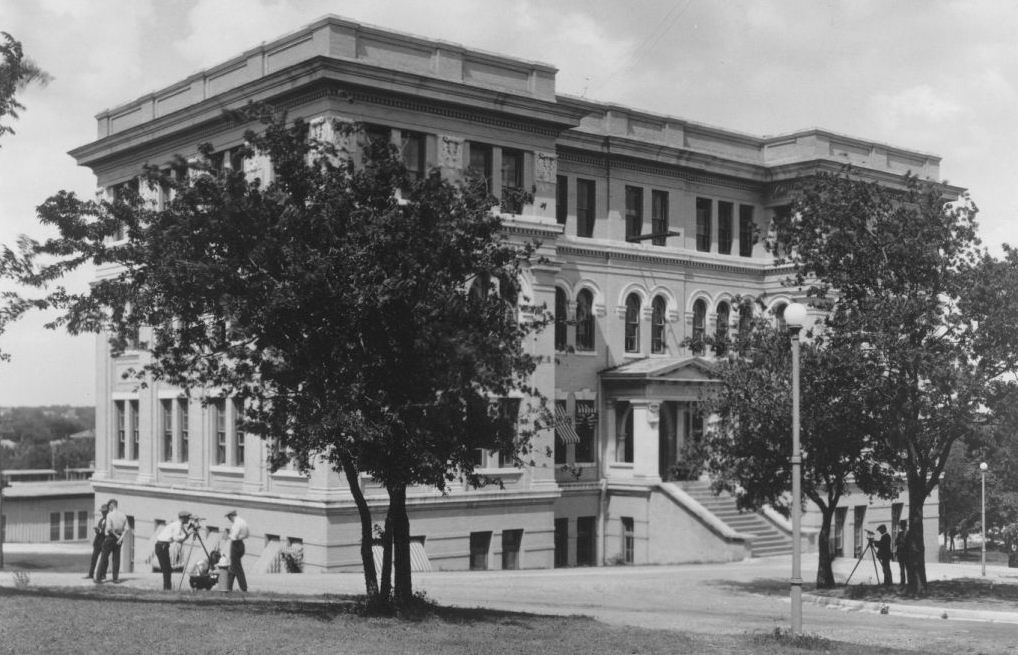
Old Engineering.Gebauer Building

Above: students practice surveying in front of the old Engineering Building, today’s Gebauer Building, just east of the UT Tower.

First on the agenda was to make plans for April 1st. To encourage their fellow students to cut classes, the group wanted to smuggle a few stray dogs up to the top floor of the old Main Building, tie tin cans to their tails, and let them loose during the first class hour at 9 a.m. It was hoped the ruckus would create enough chaos to disrupt classes for the day. The group adjourned to find the required canines, but the neighborhood dogs weren’t very cooperative, and the idea was dropped due to a lack of volunteers. Instead, the club adjourned to Jacoby’s Beer Garden, just south of the campus on Lavaca Street.

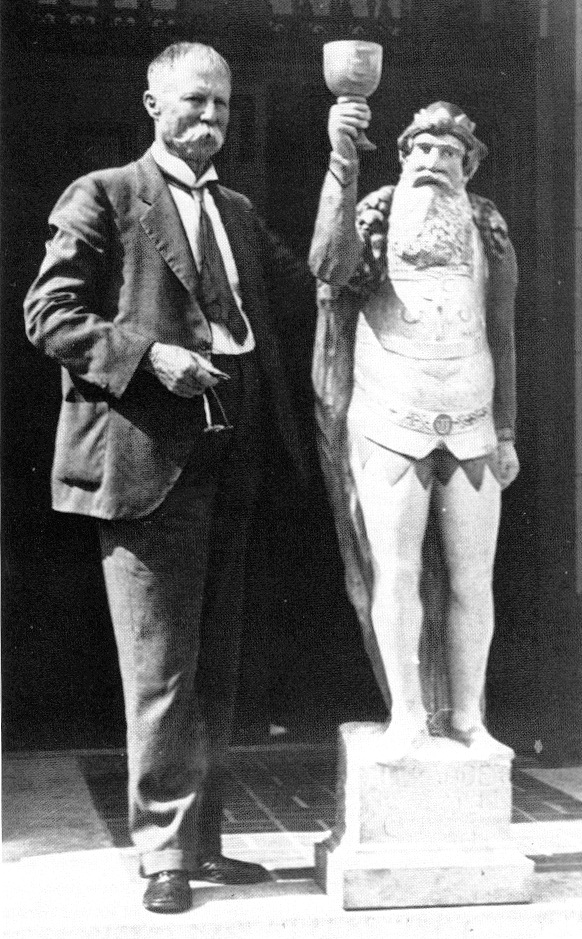
Dean Thomas Taylor and Alec.Just after midnight, as the group was about to depart, they spied a wooden statue under a porch shed near the exit. Meant to promote Falstaff Beer, it was a chubby, medieval character. After a quick conference, the group decided to “borrow” the statue and quietly spirited it away to old B. Hall, the men’s dorm, where they perfected plans for the next day. (Photo at left: Engineering Dean Thomas Taylor stands next to Alec in the 1930s.)

On the sunny and humid morning of Wednesday, April 1st, everyone in the Engineering Building knew “something was up.” Professor Bantel went to his office and locked the door, while Dr. Benedict, who had scheduled a quiz for his first class, failed to show up at all. The engineering students gathered in front of the building and lined up in rows of four, while a few created a makeshift band from some tin horns, hastily crafted kazoos, and an improvised percussion section of trash cans and lids. At precisely 9 a.m., a noisy procession set off across the campus. The engineers marched around the perimeter, entered into the west wing of the old Main Building, through the central rotunda, then out the south main door. There, the group formed a circle around the new likeness of their patron saint.

In front of Old Main, Alec was formally unveiled as a handkerchief tacked on to his head was removed with great flourish. Sophomore Joe Gill spoke eloquently on the life of Alec, who, Gill claimed, was the founder of engineering science. It was Alec who created the Pyramids of Egypt, the Hanging Gardens of Babylon, and the Great Wall of China. Alec himself surveyed and built the roads of Ancient Rome, dug the Suez Canal, and invented the T-square, the original model still on display in the United States Patent Office. Alec’s achievements were so moving to Gill, he was reportedly overcome with emotion several times and had to constantly wipe away a stream of tears from his face.

Following Gill’s tribute, the engineering students filed past their patron saint one-by-one. Each placed a small bouquet of hand-picked bluebonnets at the base of the statue, then swore allegiance to Alec with their right hand resting on a “holy” calculus textbook.

The ceremony concluded, senior engineers promptly kidnapped Dean Taylor (who had neglected to lock his office door) and went for a picnic at Bull Creek. The rest of the engineers set out for a trip to the Austin Dam and a day of swimming. Not wanting to be left out, law students abandoned their classes en masse and turned the city’s electric street cars into roving party vehicles, while the Academic Department (Arts and Sciences) went as a group to Sixth Street. Though it was never officially approved, for years April 1st became an annual “cut class” day.

The celebration for Alec also became an annual ritual, much to the chagrin of the rival law students, who had designs on the statue for their own purposes. (Read more on the origin of the UT engineering – law rivalry.)

In the spring of 1913, while Alec was resting comfortably at the foot of the stairs to the Engineering Building, law students captured the patron saint took him to a farm near Pflugerville. Placed in a pig sty and knee-deep in swine, Alec was photographed for the Cactus yearbook. “This,” claimed the lawyers, “shows Alec in his true element.”

“No!” retorted the engineers. “That is Alec feeding the laws.”

Alec has been found.1913.

Above: In November 1913, engineers celebrated the rescue of the original Alec after the laws took the patron saint to farm in Pflugerville.

In 1916, armed with the knowledge that Alec had initially been “borrowed” from Jacoby’s Beer Garden, the statue was kidnapped again when the laws approached Mr. Jacoby’s widow and “legally purchased” the statue from her. Armed with a bill of sale, the laws brought Alec before the Justice of the Peace, had him declared a vagrant, and sent him to the city jail. Dean Taylor and the engineers appealed to Governor James Ferguson, who issued a full pardon, and warned Alec to beware of “out-law-yers.”

Alec Pardon.1917

Above: After being declared a “vagrant” at the hands of the law students, Governor James Ferguson issued a pardon to Alec in 1917. Click on the image to see a larger version.

Because the laws still held a bill of sale, Dean Taylor elected to retire the original statue. In 1917, Alec’s right leg was cut into small strips, branded “CELAFOTRAP” (“Part of Alec” spelled backwards) and sent to Texas Engineers fighting in the American Expeditionary Force during the First World War A second statue was created by local woodcarver Peter Mansbendel. The new Alec was kept locked in a vault in the Littlefield Building downtown, where he could make a short but safe trip to the annual Engineer’s Banquet at the Driskill Hotel next door.

A decade later, on February 21, 1927, the evening of an Engineer’s Banquet, the Laws took Alec once again. Sixteen law students climbed up a fire escape to enter a hotel room guarded from the hallway by Dean Taylor and several engineers. The laws dismembered the statue, sent the head to Governor Daniel Moody, and delivered other pieces to law alumni. The torso was hung in a tree on the campus for a brief time, then disappeared, only to turn up years later in the Law School library.

Governor Moody returned Alec’s head to Dean Taylor, who commissioned a third rendering by Austin master woodcarver Peter Mansbendel, who incorporated the head and other salvaged pieces of the patron saint.

Alec Display.Engineering LibrayAs retirement approached, Dean Taylor was very secretive about Alec. The statue was seen in public only a few times, always surrounded by an armed guard of engineers. After Taylor’s death in 1941, Alec remained in hiding, stored by the Texas Memorial Museum in a house north of the campus. Some journalism students discovered him there in 1964, after a report that someone had spotted a coffin in the basement. Alec was restored, and in 1972 was put on display in the engineering library. (Photo at left: Alec secured in a glass case with a concrete base in the engineering library.)

In March, 1987, word reached the College of Engineering that the dismembered torso of the second Alec had recently been discovered in the Tarleton Law Library, an opportunity the engineers couldn’t resist. On March 30th, David Walker and Chris Flynn, then engineering seniors and members of the newly formed “Order of Alec,” approached Julia Ashworth, an archivist at the law library. The two claimed to be from the Cactus yearbook, and asked if they could take a photograph of the torso. Ashworth agreed. Making the excuse that there wasn’t enough light in the library, Walker persuaded Ashworth to take the torso outside. Once outdoors, three masked “unknown and unnamed ruffians” rushed by, grabbed the torso and disappeared.

The events seemed far too coincidental. Law School Dean Mark Yudof wrote a scathing memo to his engineering counterpart, Dean Earnest Gloyna, demanded the torso’s return, and labeled the scandal “Gloynagate.”

On April Fool’s Day, Gloyna was subpoenaed, along with a few engineering student leaders, to appear in court. The laws argued the engineers had waited too long to claim ownership of the torso, and demanded Alec be returned to them.

The two groups met in court on Friday, April 3rd. On one side were the “law nerds” while others wore buttons that read “unknown and unnamed engineering geeks.” Judge Harley Clark (who, as head cheerleader in 1955 introduced the “Hook ’em Horns” hand signal) presided, and listened to both arguments. In the end, Clark made no decision of ownership, hoped that Alec’s “thieves” would keep him safe, and that the rivalry between the two schools would continue.

Today, Alec, along with the recovered torso, are stored in sealed exhibit cases in the engineering library. The statue is bolted to the display case, which has a heavy concrete base.

Alec is safe, for now.

Alec Display.Torso

Above: The recovered torso and pieces of the original Alec statue – included one branded “CELAFOTRAP” – are on display in the engineering library.

How to Celebrate Texas Independence Day

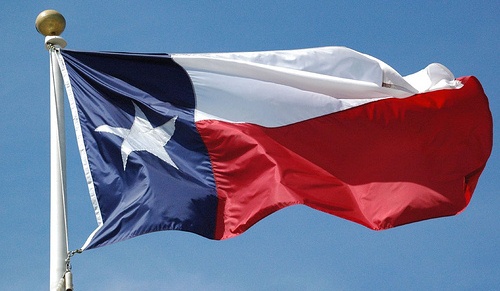
Texas Flag

For the proudest of Texans, it’s the most important day of the year, a holiday that no other state can claim. March 2nd is Texas Independence Day, and its observance on the University of Texas campus began with some tenacious students, a missed class, an afternoon spent at Scholz’ Beer Garden, and a very noisy cannon.

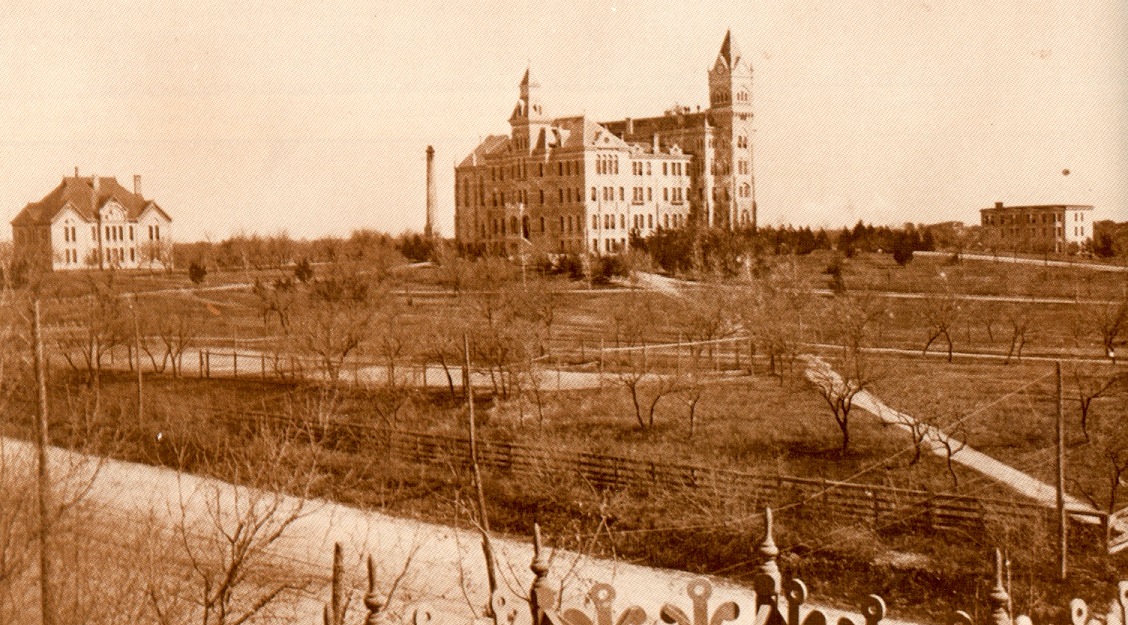
In the spring of 1896, the fledgling University was confined to a 40-acre campus, with a white-washed wooden fence around the perimeter to keep out the town cows. A Victorian-Gothic Main Building, only two-thirds complete, commanded the hill in the center. It was flanked by the Chemistry Lab Building to the northwest, and B. Hall, a men’s dorm, down the hill to the east.

UT Campus in the 1890s

The University’s 482 students were divided into two departments: Academic and Law. The Academic Department encompassed studies comparable to today’s Colleges of Liberal Arts and Natural Sciences, and the “Academs,” as its students were known, pursued their classes for the usual four years, most leading to a Bachelor of Arts degree.

Law students, though, needed only two years to complete an LL.B. – a Bachelor of Laws and Letters – and a previous undergraduate degree wasn’t required for admission. Junior Laws were first-year law students and often the same age as other UT freshmen, while Senior Laws were completing their final year.

On the cloudy, warm, and humid morning of March 2, 1896, the Junior Laws were waiting for their next lecture in criminal law, taught by Judge Robert Batts, when one student bemoaned the fact that the day was Texas Independence Day, a legal holiday for Texans, except, apparently, for those on the University campus.

For years, students had regularly petitioned the faculty for a break on March 2nd, but had always been refused. “Our faculty is afraid to grant us holiday, even on such occasions,” complained the Alcalde, a weekly student newspaper that pre-dated The Daily Texan (and not to be confused with the present alumni magazine). “They fear that some 2 x 4 politician, or still smaller newspaper, will accuse them of not earning their money. That is the real cause of their reluctance to grant a cessation of routine grinds, to allow our Texan bosoms an inflation of truly patriotic atmosphere.”

After serious discussion, the Junior Laws decided they would honor such an auspicious day by avoiding class altogether, and invited Judge Batts to join them. The diplomatic Batts responded with an eloquent speech, espousing all of the grim and dire things that might happen to Junior Laws who skipped lectures. The students listened, politely applauded, and promptly ignored Batts’ pleas, choosing instead to spend the day at Scholz’ Beer Garden just south of the campus, where they were reportedly “very gemuethlick.”

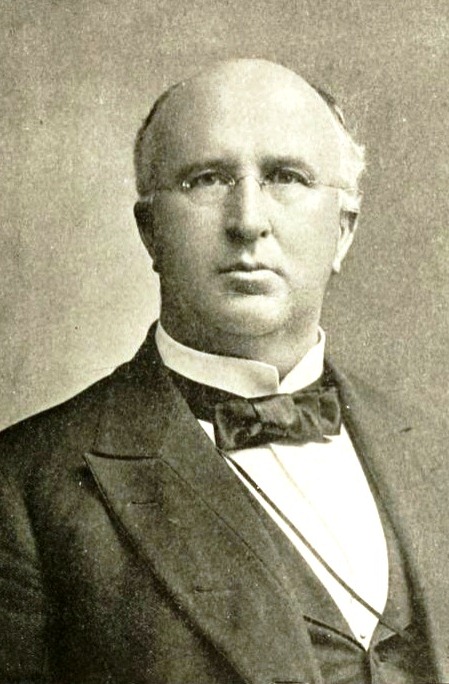
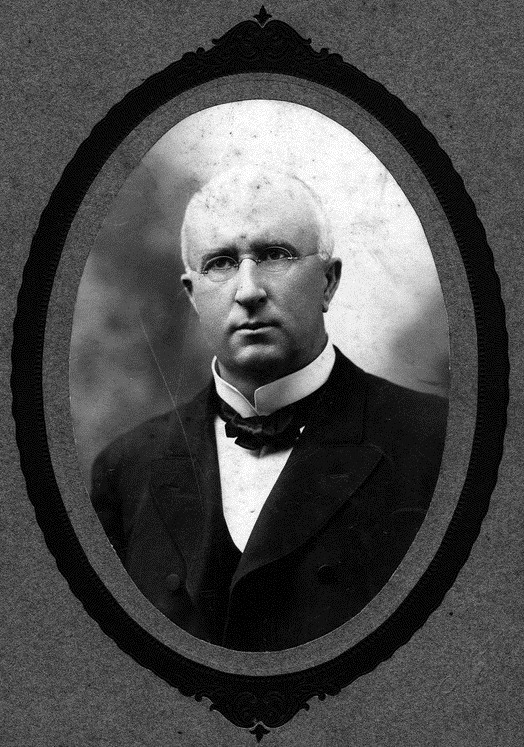
George Tayloe WinstonOne year later, in 1897, the now senior law class was determined to include the entire campus community in a celebration of “the natal day of Texas Independence,” and again petitioned the faculty for a holiday. But the Board of Regents had recently appointed George T. Winston (photo at left) as president of the University. A native of North Carolina, Winston had attended the U.S. Naval Academy and was at the head of his class when he was reluctantly forced to leave school because he was too prone to seasickness. Winston completed his studies at Cornell, though he continued to follow the rigorous exercise regimen instilled in him at the Academy. While in Austin, President Winston often ended the work day by first removing his suit coat, and then leaving the office for a brisk walk/jog west of campus to the Austin Dam, where the “Hula Hut” restaurant is today. There he acquired a canoe, paddled up the lake to Mount Bonnell, climbed to the peak to take in the view, and then returned to the campus along the same route. Occasionally, a few professors or students would join him. (He might have been UT’s most physically fit president!)

Winston’s Academy experience also taught him to be a thoroughly patriotic American. He neither understood nor shared the affinity Texans had for March 2nd, recognized only one Independence Day, and that was on July 4th. Undaunted, the Senior Laws pressed ahead with their plans, hoping to impress upon the president the importance of the second day of March.

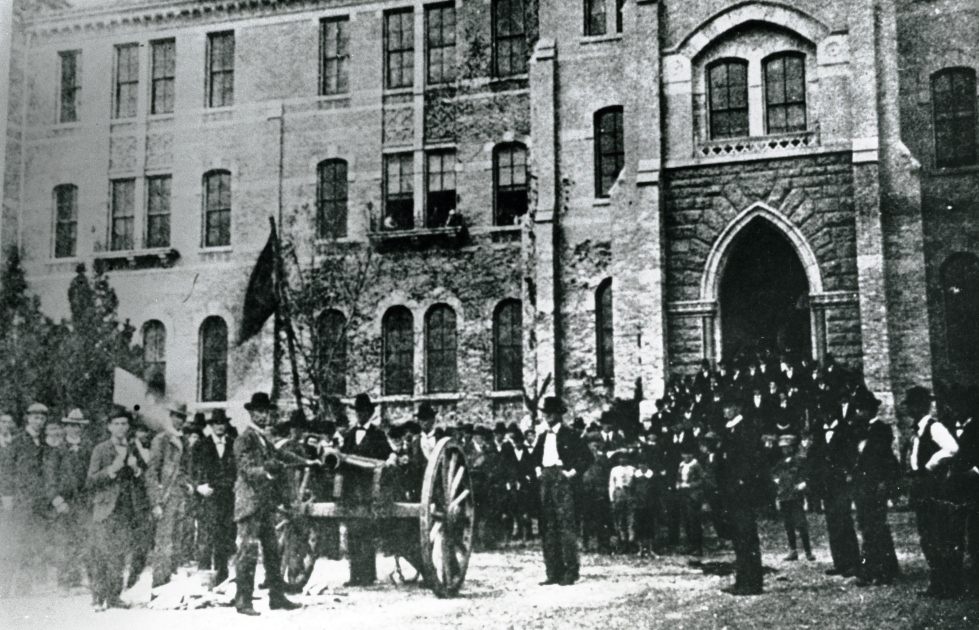
Working with the Texas Attorney General, four of the students signed a bond in order to borrow one of the two brass cannons that stood guard – and are still on display – in front of the State Capitol. It took most of the afternoon of March 1st to roll the cannon to the Forty Acres, where the Laws planned to use it for a 21-gun salute to Texas at dawn the following day.

Just before sunrise on March 2, 1897, the Senior Laws arrived, anxious to start the festivities, only to discover that the cannon had been spiked. A large nail had been driven in to the ignition hole, and it took some time, persistence and the employment of several pocket knives to remove the offending item. By then, President Winston had arrived on the scene, and was rather unhappily resigned to the fact that the students were going to celebrate, whether or not the faculty approved. (Years later, Winston finally admitted that he had spiked the cannon himself!) Hoping to minimize the damage to the class day, Winston asked the Laws to move the cannon away from the Main Building, down the hill to the University’s athletic field, about where the O’Donnell Building and the Gates-Dell Computer Science Center now stand. Or, they could wait until after noon to have their fun. The students elected to do both.

Boom!! Starting at 9:30 a.m., an otherwise peaceful March morning was harshly interrupted by a series of cannon blasts from the athletic field. The entire Law Department attended, including Professors Robert Batts and John Townes, and following the cannon fire, each person present gave a short but sincere patriotic speech. The talks by Batts and Townes were greeted with particularly loud cheers from the students.

Meanwhile, a distracted Academic Department continued to hold classes as best as it could in the old Main Building, some of the faculty hoping the Laws would tire of their efforts, while other professors were no doubt wishing they could join in the fun. The Laws, though, weren’t going to allow Texas Independence Day to pass without including the rest of the University.

Texas Independence Day.March 2 1897

At 1 p.m., a fresh supply of gun powder was secured, and the cannon was dragged up the hill and positioned directly in front of the Main Building, facing the Capitol. Boom!! The first blast “threatened to break every window in the building,” claimed an eyewitness. In a flurry, the Academs vacated their classrooms and joined the Laws outside and the scene of the morning was repeated, with more speeches from students and professors.

Midway through the afternoon, it was discovered that President Winston had quietly made an escape to his home just north of the campus, to which a large and boisterous committee of students promptly followed. Refusing to take no for an answer, Winston was persuaded to return and make a speech of his own. He opened with the paraphrased remark:

“I was born in the land of liberty, rocked in the cradle of liberty, nursed on the bottle of liberty, and I’ve had liberty preached to me all my life, but Texas University students take more liberty than anyone I’ve ever come in contact with.”

The students responded with their loudest cheers of the day, and gave President Winston a rousing rendition of the ‘Varsity Yell:

Hullabaloo! Hoo-ray! Hoo-ray!
Hoo-ray! Hoo-ray!
Varsity! Varsity! U. T. A.!

Since then, UT students and alumni have recognized March 2nd as a time to celebrate both the Lone Star State and their favorite University. In 1900, the Ex-Students Association adopted a resolution which states: “Whenever two Texas Exes shall meet on March 2, they all shall sit and break bread and pay tribute to the institution that made their education possible.”

Today, the on-campus celebration is limited to a popular annual breakfast hosted by the Tejas Club, and attended by the UT president, faculty, staff, and invited graduating seniors, though alumni chapters worldwide join in on the fun, and organize events that raise funds for UT scholarships.

Texas Independence Day.March 2 1981

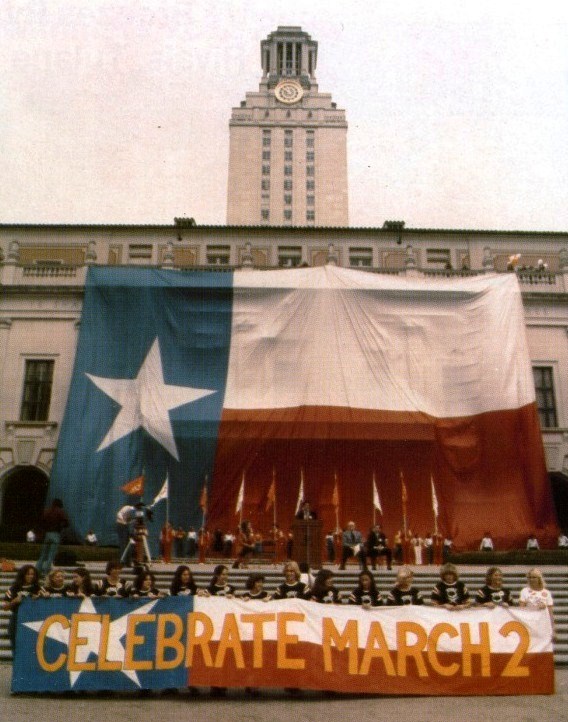
Above: In the 1980s, Texas Independence Day was remembered on the Main Mall at noon with members of the Longhorn Band, Alpha Phi Omega’s “world’s largest Texas flag” draped in front of the Main Building, and Texas birthday cake served by the Orange Jackets women’s service organization. To continue the 1897 tradition, the Texas Cowboys fired Ol’ Smokey, the cannon used at football games. The image above is from 1981.

The First Snow Day

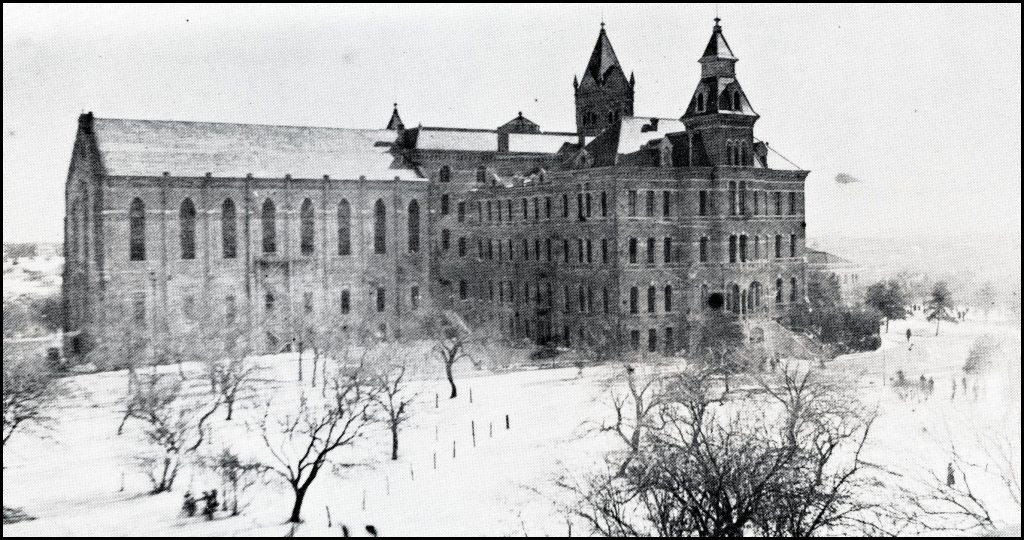
Above: Snow blankets the UT campus in front of the old Main Building.

Snow days in Austin are rare. When Old Man Winter makes an infrequent visit to the capital of Texas, it usually closes down both the city and the University. But UT’s first snow day depended on some daring acts by a few students, and a University president with a sense of humor.

In February, 1899, an exceptionally strong Arctic surge abruptly disturbed an otherwise quiet winter across most of North America. Dubbed the Great Blizzard of 1899, it brought record cold to the South, including a -1ºF low temperature in Austin. More than 35 inches of snow fell in Washington, DC, and white-out conditions were experienced as far south as Tampa, Florida.

On the morning of Saturday, February 11, 1899, sleepy University of Texas students awoke to find Austin cloaked in six inches of new snow, with more falling. At a time before long-range forecasts, pinpoint Doppler radar, or the Weather Channel, the snowfall was completely unexpected. “In the old days at Varsity, snow was a rarer thing than ice cream at B. Hall,” wrote Fritz Lanham, the first editor of The Texan student newspaper who also lived in Brackenridge Hall, or “B. Hall,” the University’s first dormitory for men. “Imagine, therefore, the surprise of the students when they rose from their larks to find the earth receiving a breakfast of heavenly flakes!”

It was also a class day. For the first few decades, University classes met six days a week, either on Monday, Wednesday, Friday or Tuesday, Thursday, Saturday. Since most of the faculty and UT’s 600 students lived on or within walking distance of the campus, and as there was no radio, television or internet to broadcast a school closure, Saturday classes began as usual, promptly at 9 a.m.

Above: A side view of Old Main and a snowy Forty Acres. The photo was taken the same day as the one at the top of the story.

Of course, the snow was a distraction. Students gazing from the windows of the newly completed Main Building (better known as “Old Main,” and since replaced by the current Main Building and Tower) couldn’t help but think that such an unusual day ought not to be spent in a classroom.

The denizens of B. Hall agreed. As the snow fell, so fell their interest in academic work. Schemes hatched in the minds of the Hall’s residents as snowballs formed in their hands, and gradually a relationship of cause and effect between the two was realized. The only piece missing was the official declaration of a holiday, which could only be granted by the University president.

After some discussion, a small band set out from B. Hall. Led by Walter “Ovey” Schreiner and Walter Monteith, both captains of the football team, they boldly made their way up the hill to Old Main, climbed the south steps, passed through the front entrance, and then immediately turned left to enter the sanctum sanctorum, the office of UT President George Winston. Their mission wasn’t a secret, and others were eager to join the cause. By the time the group reached the Main Building, it had snowballed into a crowd, and each student carried an armful of frosty white pellets to “bolster up this declaration.”
The mob of students squeezed into the president’s office, where Schreiner and Monteith, respectfully, but firmly, presented their request for a day off. Winston eyed the students, spied the arsenal of snowballs, but didn’t panic. He’d been in this situation before.

George Winston.George T. Winston (photo at left) was appointed UT’s first full-time president in 1896, succeeding Leslie Waggener, who was then both Chairman of the Faculty and President ad interim. In the spring of 1897, Winston received a request from the students who believed that March 2nd, Texas Independence Day, should be an annual University holiday.

But Winston hailed from North Carolina, had attended the Naval Academy and Cornell University, and neither understood nor shared the affinity Texans had for March 2nd. He flatly refused the petition. The only Independence Day he recognized was on July 4th.

Undaunted, the students contacted the Texas Attorney General, signed a bond to borrow one of two brass cannons then in front of the State Capitol, rolled it a mile to the campus, and on March 2nd fired it repeatedly in front of Old Main. Classrooms emptied, faculty joined the students in making patriotic speeches about their beloved Texas, and a very reluctant President Winston was brought before the assembly to say a few words. His comments were paraphrased:

“I was born in the land of liberty, rocked in the cradle of liberty, nursed on the bottle of liberty, and I’ve had liberty preached to me all my life. But Texas University students take more liberty than anyone I’ve ever come in contact with.”

Two years later, facing a legion of anxious students armed with melting snowballs, a wiser President Winston smiled. “Certainly, young gentlemen. It seldom snows at this latitude, and you are at liberty to enjoy it.”

The news wafted through the halls of Old Main, classrooms were opened, “and the prisoners liberated.” The only dissenting voice came from English Professor Mark Liddell, who was unhappy at the interruption of his lecture. Though he may have been a bit warm under the collar, his temperament was surely cooled as a volley of snowballs was fired in his direction.

The rest of the day was spent in a great snowball battle in which the residents of B. Hall held their own against the combined forces of the remaining students and faculty.

1963.West Mall Snowball Fight

Above: A snowball fight of a later day. A fierce battle breaks out on the West Mall after a snowfall in the winter of 1963. Click on image for a larger view.

Hullabaloo! UT’s First Home Football Game

1893 Yale Princeton Football.

Above: Yale vs. Princeton on Thanksgiving Day, 1893, at the Polo Grounds in New York City. More than 40,000 attended the contest, including the fans who paid to sit on Coogan’s Bluff in the distance. At the moment this photograph was taken, the UT football team was playing its first-ever game in Dallas.

Well, the foot ball fever has struck Austin at last,” declared the Austin Statesman in December 1893. For years, local citizens had been reading newspaper and magazine articles about a game called “foot ball” that had become wildly popular in the northeastern United States. “The game has taken a high place in the affections of the American undergraduate,” reported Century Magazine in 1887. “In the three colleges in which it is played most successfully, Yale, Harvard, and Princeton, the undergraduates would give up base-ball more willingly than foot-ball.” An Americanized version of the British sport rugby, spectacular contests between city or college teams drew enormous crowds. An annual Thanksgiving bout between Yale and Princeton had escalated to the point that it was played on neutral turf, at the Polo Grounds in New York City, in front of forty to fifty thousand spectators. Finally, on the sunny Saturday afternoon of December 16, 1893, the people of Austin were going to witness a genuine, bona-fide, actual-factual football game for themselves, as the University of Texas hosted the San Antonio Foot Ball Club.

~~~~~~~~~~

Technically, football had already been seen in Austin, though it better resembled the sandlot variety. In December 1883, less than three months after the University of Texas had formally opened, a group of UT students decided to have a football game. They were inspired, in part, by the reports of the Thanksgiving Day contests back East. With no other team available, one of the would-be players – law student Yancey Lewis – arranged a match with the Bickler School, a private preparatory academy in downtown Austin. Lewis had been a tutor at Bickler before he enrolled at the University. In a week, both schools had to form teams, learn the rules, and practice. The game was held on a less-than-ideal patch of pasture land near the present day Blanton Museum of Art. No one on the field had actually seen a football game, and there certainly weren’t any refs available to enforce the rules. No matter. Both sides muddled through, though when it was over, the Bickler School was victorious, two goals to none. And poor Yancey Lewis had suffered the worst of it at the hands of his former students. For the rest of the academic year, UT lost all interest in football.

Over the next decade, football at the University was an on-again, off-again affair. Students would attempt an intramural game one year, then pass on it the next. Not until the fall of 1893, after men’s football clubs had been established in Dallas, San Antonio, and Galveston, did the University field its first “official” squad.

1893 UT Football Team.Portal to Texas History

Above: The 1893 University of Texas football team.

The team’s debut was an away game against the undefeated and heavily favored Dallas Foot Ball Club on Thanksgiving Day, November 30, 1893. The University was a last-minute substitute for the Little Rock, Arkansas men’s club, which was unable to make the trip to Dallas. Instead, the UT squad and a group of supporters took the train north, and in front of 1,500 fans, pulled off an 18 – 16 upset. “Our name is pants and our glory has departed,” griped The Dallas Morning News.

Next on the schedule and just over two weeks later, on December 16, the San Antonio Foot Ball Club arrived in Austin to take on the University team.

~~~~~~~~~~

Football practice was held on the northwest portion of campus, where the Texas Union building currently stands, but the field wasn’t of the quality desired for a formal game. Wanting to be good hosts, the UT team acquired access to the professionally groomed fields at the new Zoo Park, just west of town at what is today the Lower Colorado River Authority (LCRA) complex next to the Tom Miller Dam. (If you’ve eaten at the Hula Hut restaurant, the fields would have been just across the street.)

Austin Dam.1893.

Above: The original 1893 Austin Dam, replaced by the Tom Miller Dam in 1940. Zoo Park fields were across the street from the dam’s turbine generators, seen on the right.

In the summer of 1893, the city celebrated the opening of the ambitious Austin Dam. Made of granite, 60 feet high, and nearly 1200 feet long as it stretched across the Colorado River, it was at the time one of the largest dams in the world. The dam brought with it the promise of reliable electric power for the city and a potential economic boon. It also created a lake. Dubbed “Lake McDonald” for Austin Mayor John McDonald, who had convinced the city to build the dam, the lake offered novel recreational opportunities, including rides on a steamboat christened “Ben Hur.” Docked next to the dam, the boat – and the lake itself – soon became a popular getaway spot for the city. Within months, the surrounding acreage saw new development. Businessman Dick Bulian opened Bulian’s Garden Saloon and Picnic Grounds, a small zoo with Texas wildlife was accompanied it (though details are sketchy), and an athletic field was created, primarily for the Austin city baseball team, but used for other sporting events as well.

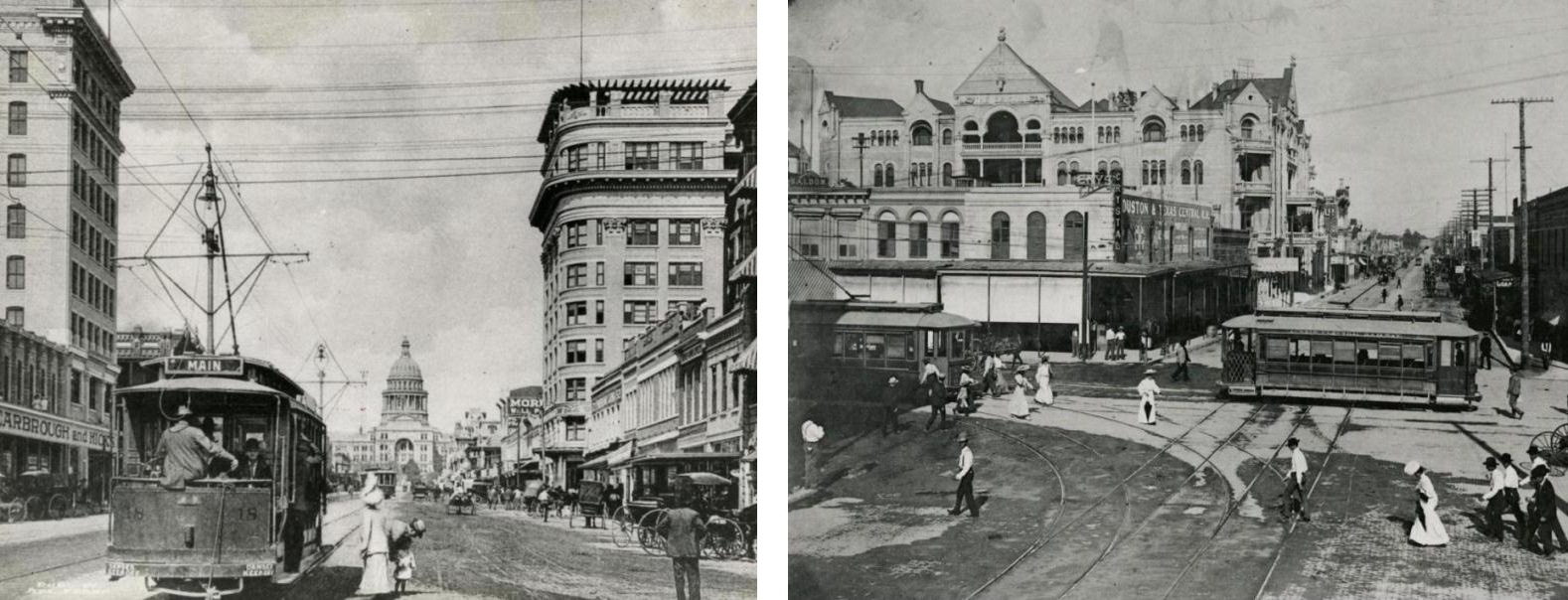
Public transportation to Zoo Park was provided by the Austin electric trolley system, which, thanks to the dam and its electric power, replaced the slow, mule-drawn streetcars. A special line ran west on Sixth Street and out along what is today Lake Austin Boulevard to deliver visitors to the dam and nearby attractions.

1893 Austin Dam

Above: Looking across the Austin Dam. The steamboat Ben Hur is docked on the left (where the Hula Hut restaurant can be found today) and the power house on the right. The Zoo Park athletic field was behind the power house. Poorly engineered and constructed, the Austin Dam failed in 1900 and was replaced in 1940 by the Tom Miller Dam, which created present-day Lake Austin. Click on the image for a larger view.

Below: The Austin electric trolley system was, in part, a result of electric power supplied by the Austin Dam. On the right, at the corner of Sixth Street and Congress Avenue, the tracks turned on to West Sixth and continued out along today’s Lake Austin Boulevard.

trolley

For more info, UT history professor Bruce Hunt has written about the Austin Dam here, and the city’s electric trolley system here.

~~~~~~~~~~

As most of Austin had never seen a football game, the day was full of surprises for the uninitiated. A few hours before the 3 p.m. start time, traffic picked up on the unpaved road out to Zoo Park. Additional trolley cars were added to accommodate the demand, which joined a steady caravan of horses and carriages, all full of people excited to see see the game. “The broad boulevard was alive with carriages and vehicles of varied types, all moving in the same direction,” reported the Dallas Morning News.

The University colors were everywhere. Ribbons were worn on lapels, tied on to canes, wrapped around hats, decorated horses, and woven into the wheels of carriages. But they weren’t the burnt orange seen today. In the 1890s, all four of UT’s buildings were constructed of pale yellow pressed brick and limestone trim. From a distance, the campus appeared gold and white, and the students decided to adopt the colors for the football team. While the official hues were listed as “old gold and white,” the ribbons were various shades of yellow. (How UT chose orange and white as its colors is here.)

UT Campus in the 1890s Above: The UT campus in the 1890s, as seen from the southwest at the corner of Guadalupe and 21st Streets. From left, the Chemistry Lab building, smokestack of the small power plant, two-thirds of the old Main Building, and B. Hall, the men’s dorm. All were made from yellow pressed brick and limestone trim. The wooden fence along the perimeter kept out the local town cows. Click on the image for a larger view.

The Zoo Park field wasn’t equipped with bleachers. Instead, the crowd stood around the sidelines and jockeyed for the best views. Texas Governor James Hogg was among the spectators, though he remained atop a high spring wagon and enjoyed the game from its height.

As the masses grew, so did the noise. University supporters repeatedly broke into the ‘Varsity Yell, at the time UT’s first and only cheer:

Hullabaloo!! Hoo-ray! Hoo-ray! Hullabaloo!! Hoo-ray! Hoo-ray! HOO-ray! HOO-ray! Varsity! Varsity! U! T! A!

Each yell was followed by an onslaught of tin horns. The vuvuzelas of their time, tin horns were generally children’s toys, occasionally heard at parades. But UT students had brought them en masse to the game, and the commotion was more than an unnamed Austin Statesman reporter could bear. In his account of the day, the calm of the field was constantly interrupted by the “ungodly snort of the asthmatic tin horn.” That women students were using them defied all sense of social convention and certainly wasn’t considered ladylike. “The way some of those girls did blow was a caution,” continued the reporter. “With cheeks puffed out and eyes starting they tooted and tooted, at the same time putting unlimited confidence in the garments which so tightly fitted their trim figures. How the strain was stood in several instances is a mystery to the masculine mind.”
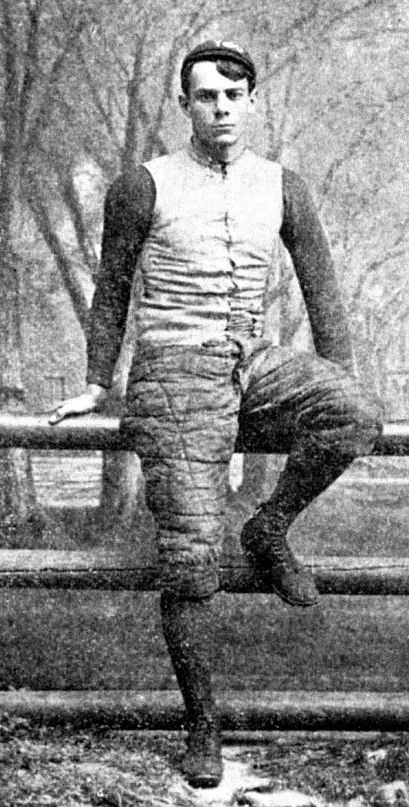
1890s FootballerA few minutes before the start, the University and San Antonio teams entered the field and were greeted by another round of cheers and horns. The players were all outfitted with the standard uniforms recommended by Spalding’s Official Guide to Football, then the sport’s most trusted reference. Along with a long sleeved jersey, according to the Guide, “the ordinary player should wear a canvas jacket … home-made or purchased … and lace up in front so that it can be drawn quite closely.” Trousers were to made of some “stout material” and well-padded, “quilting in soft material over the knees and thighs.” Long woolen stockings were often covered with shin guards, and leather shoes – “kangaroo skin preferably” – which were provided with a replaceable leather spike to prevent slipping, completed the outfit. Naturally, Spalding’s sold the equipment for a nominal fee.
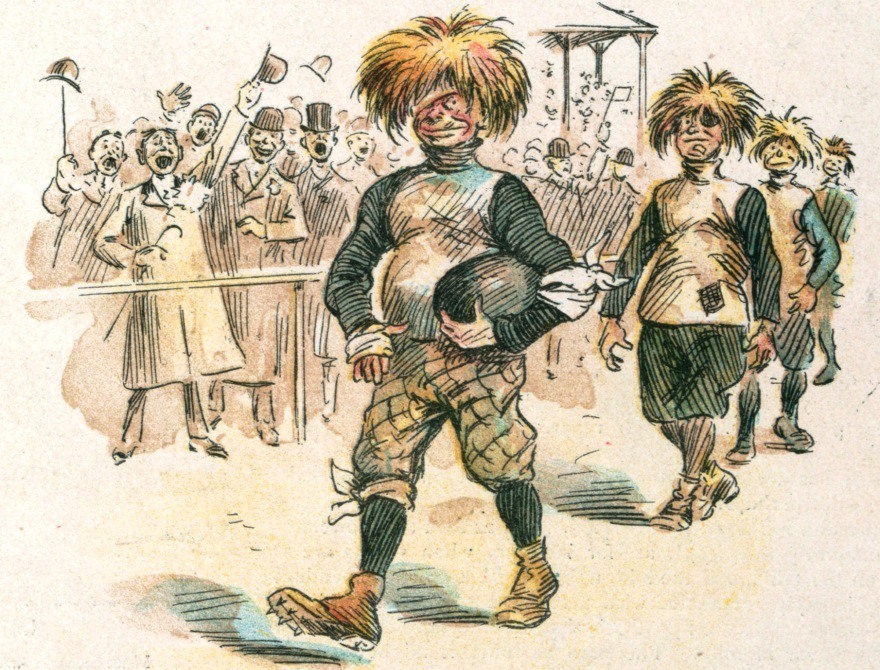
A glaring omission from the uniform was something to shield the head. While a few players strapped nose guards over their faces, most went without any protection. Instead, they grew their hair longer, and at game time wrapped bandages around their heads and over the tops of ears (to prevent ears from being pulled and torn), which pushed the hair up into a mop. The mat of hair was supposed to be sufficient cushioning to prevent severe injuries.

As football became more popular and college players grew their hair, the style became a trend. “Long hair the rage. The football players have set the fashion,” was the title of an 1893 article by the Dallas Times Herald. “An epidemic of long hair is upon us,” though it cautioned that not all who sported long hair were footballers. “The football man with his flowing locks is the hero of the hour, and so every young man must needs let his hair grow in the hope of making people think that he, too, is a leader on the gridiron field of mud and glory.”

Above: From the Dallas Times Herald, “scrubbing brush, chrysanthemum, and mop varieties” of football hair styles, as well as an illustration on the “practical advantages of hair padding.” UT players preferred the chrysanthemum.

Below: An 1894 issue of Puck, a humor magazine published in New York City, ran a cartoon spoof on football players and their hair pushed up in to mops.

Puck Magazine.Thanksgiving 1894.Football

Heavy traffic out to the park delayed the arrival of the two referees by a few minutes, but the game was ready to begin at quarter past the hour. The San Antonio team won the coin toss and chose to take the ball. Unlike a modern kick-off, play simply commenced in the middle of the field. San Antonio led off with a flying wedge and gained 12 yards on the first play.

The flying wedge, a popular mass movement play introduced by Harvard in 1892, was used by both teams. As with many early football plays, it was inspired by war tactics. In this case, the wedge took its cue from Napoleon’s use of a heavy concentration of military force upon a single point of the enemy line. Ten men, tightly lined up in a “V” formation, ran full speed against a single defensive player across the line of scrimmage. The ball carrier was protected behind the “V.” In later years, the wedge was deemed too dangerous for football, especially when the players weren’t wearing headgear.

While San Antonio was successful early, it didn’t last. The UT players employed their own wedge – so effective in their upset victory against Dallas two weeks before – and scored two touchdowns in the first half. At the time, touchdowns were worth five points, with an extra point kicked afterward. At halftime, it was UT 12 and San Antonio 0.

The second half didn’t fare any better for the visitors. “At a glance, the most inexperienced eye saw that the ‘varsity men far outclassed their antagonists,” observed the Dallas Morning News. (The term ” ‘varsity,” with an apostrophe, was a commonly-used contraction of the word university.) Repeated fumbles by the visitors cost them two safeties, worth one point each. On the rare occasion when San Antonio captain Jack Tobin found himself with the ball and was running upfield, he was almost always stopped by UT co-captain Paul McClane. As the News reported, “before [Tobin] traversed three yards, Paul McClane tackled him and incontinently sat on his head til his compressed lungs, all filled with fine sand, could sound the wail of surrender – ‘down’.”

The University scored two more touchdowns, but extra point kicker Ad Day “seemed to have lost his rabbit’s foot,” as both of the kicks went wide left. In the waning seconds of the game, despite a valiant defensive effort by San Antonio, UT half back Dick Lee “made a pretty run, and by excellent interference and much shoving, reached the goal line just between the posts, and touched down again amid yells and horn music.” Day found his footing again, and made the extra point. The University had scored five touchdowns, three extra points, and two safeties, and defeated the San Antonio Football Club 30 – 0.

Governor Hogg remained an interested spectator throughout, and “cheered the boys when a telling play was made.” After the game, the governor was the recipient of both the game ball and an “impromptu oration” by the crowd. But the Austin Statesman reporter was through. Football was just to loud.

UT Football .1893.Dallas Morning News

Above: Running interference for the ball carrier. From the Dallas Morning News.

Photo sources: The image of the 1893 UT football team and photos of the Austin electric trolley system were found at the Portal to Texas History web site produced by the University of North Texas, while the images of the  Austin Dam can be found at the Lower Colorado River Authority’s Online History Center.

The UT Holiday Tree

Swante Palm and Oran Roberts

Above: Santa hats for everyone! Even in the Briscoe Center, which houses the UT Archives, the marble busts of Swante Palm and Oran Roberts are decked out for the holidays. Swante Palm was a Swedish immigrant to Austin who in 1897 willed most of his 12,000 volume library to the University. As Texas governor, Oran Roberts oversaw the passing of legislation to create UT and for a time served as a law professor. The busts were created in 1899 by Austin sculptor Elizabeth Ney, and were the first gifts to the University by the alumni association.

PCL Christmas TreeIt’s the season! While the week after Thanksgiving is fraught with due dates for research papers, a last round of tests, and with final exams looming, the campus still finds ways to get in the holiday spirit. A Texas-sized, eight-foot Menorah is placed on the West Mall to celebrate Hanukkah, enormous Christmas trees grace the lobbies of the Texas Union and Student Acitivity Center, and strings of lights, wreaths, and other decorations are scattered throughout the campus. (The “book tree” at left was found in the Perry-Castaneda Library.

In 1987, perhaps inspired by Austin’s popular Zilker Park Christmas tree, the University unveiled it’s own official “Holiday Tree.” The giant cedar that still grows next to the Littlefield Home was chosen for the honor. The tree was planted in the mid-1920s, a few years after George Littlefield had passed, by his niece who had moved in to the house to look after her surviving Aunt Alice.

Cranes were needed to install strands of several thousand orange and white lights placed over the top of the tree and anchored to the ground. On Tuesday, December 1st, just before dusk on a clear evening, a tree lighting ceremony featured the Longhorn Band, the Innervisions Gospel Choir, and UT President Bill Cunningham. From a distance, the Holiday Tree resembled something like a huge orange gumdrop.

Holiday Tree.1987.1.300.

Above: The University community gathers for the tree-lighting ceremony at the Littlefield Home. The Longhorn Band and several UT student choral groups provided musical entertainment. (Click on the image for a larger view.)

Unfortunately, the tradition of the Holiday Tree was short-lived, and only survived about five years. The weight of the lights and heat from the bulbs were found to be overly stressful for the great cedar, and the practice was discontinued in the early 1990s.

Littlefield Home.Holiday Tree

Above: On campus, the Holiday Tree was often called the “orange gumdrop.”

Holiday Tree.1987.2.300.

A view from behind the tree, looking through the lights and up to the UT Tower.

holiday-tree